Gurdjieff’s Homeland – In the Hills of Eastern Turkey

On the edge of the ruined city of Ani, where Gurdjieff spent several months

What kind of terrain did George Ivanovich Gurdjieff grow up in? What landscape shaped his boyhood? Recently, in August 2025, I had a rare opportunity to see for myself, on a study tour to Eastern Turkey. I’ve long been enthusiastic about Turkey, going there first as a student to teach English, then drawn back again and again to the magic of Istanbul, and the fascination of the Lycian coast, Cappadocia, and the Sufi traditions both of Konya and hidden in the heart of Istanbul. I even co-owned a house in Kas for a few years! But I’d never visited its Eastern edges – the names of Lake Van and Mount Ararat carried a magical aura, and the chance to see more of the ancient Silk Road, and Byzantine remains was too good to miss. It was a new opportunity, since only in recent years has the area been safe for visitors, following the reconciliation between the government and Kurdish forces. So, following the old adage, ‘If not now, then when?’ I signed up.
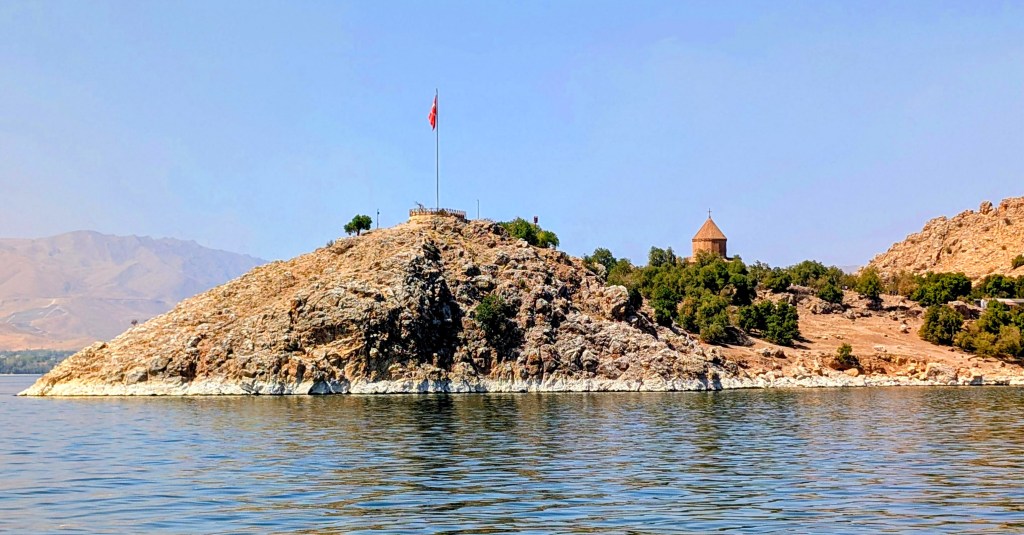
A 10th c. Byzantine church on the island of Adkamar, in Lake Van

But it was only after I’d made the booking that I realised that this was Gurdjieff territory too. I had read Meetings with Remarkable Men several times, but not remembered the place names, or connected it with the tour. We were going to visit Kars, where he spent much of his youth, the deserted city of Ani where he hid out for a while, and Van to where he travelled with his father for a traditional singing contest. The trip now had a whole added layer of significance. It was an extraordinary journey, into remote terrain and with spectacular archaeological sites, and very friendly people. It was hot, it required stamina, and the food wasn’t as good as Turkish food can be, but it was a wonderful experience.

Gathering together my thoughts, impressions and pictures after the tour, I decided to share these with others who might also be interested in the Gurdjieff connection. I can certainly say that it’s added a new dimension to my knowledge about his life and teachings.

As I want to move straight into describing the landscape, I’ve put a brief note about Gurdjieff and his work at the end of this post, for anyone unfamiliar with him, plus a note about my own connections.

KARS -Gurdjieff’s Family Home

The old fortress of Kars

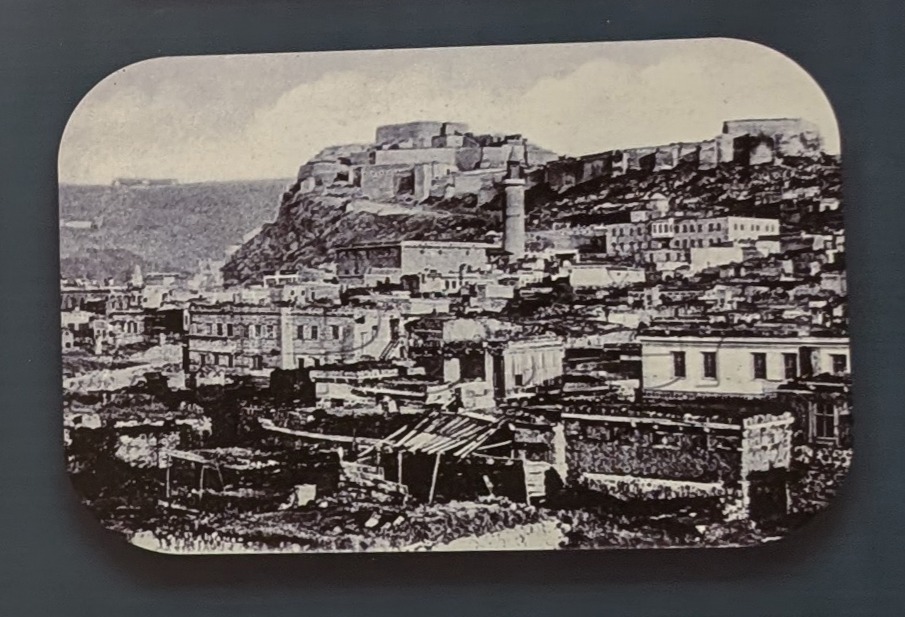
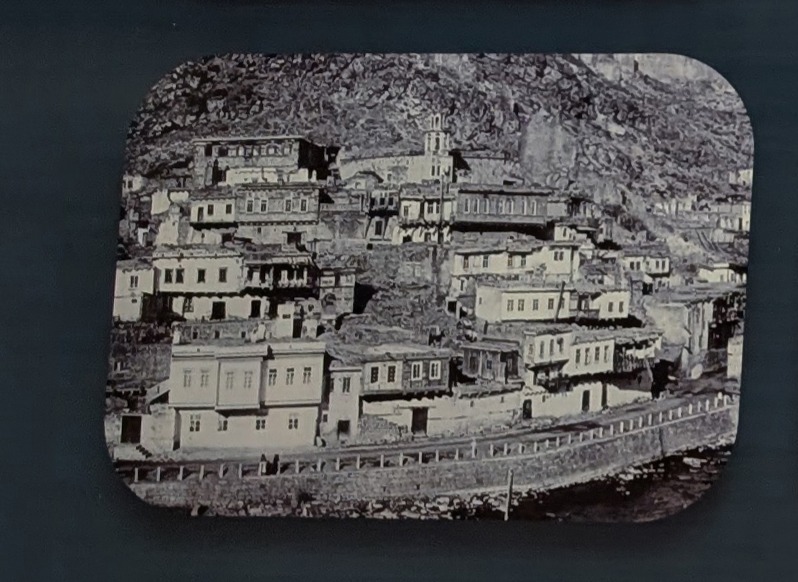
The city of Kars was originally part of Armenia, but became a Russian province between 1878 and 1917. Although it’s now within Turkey, like most of the surrounding area, its culture used to be basically Armenian. It was where Gurdjieff and his family moved to from Alexandropol, some sixty miles away, after his father’s fortunes as a cattle owner failed. Gurdjieff’s chronology is never precise – it’s generally considered that he was born in 1866, though no means certain – but it seems that he spent much of his boyhood in Kars.

The Kars of today is of course very different from that time in the late 19th century, but the fast flowing River Kars still runs around the city, and the deserted citadel still crowns the view. It’s famous for its cheese, and there are many herds of cows grazing in the surrounding countryside, plus flocks of geese which are also a local speciality on the menu. Many of the substantial old Russian buildings are still standing and in use; sometimes the black stone (local basalt) gives them a gloomy feel. Others are painted in pastel colours of green and yellow, in the Russian style.
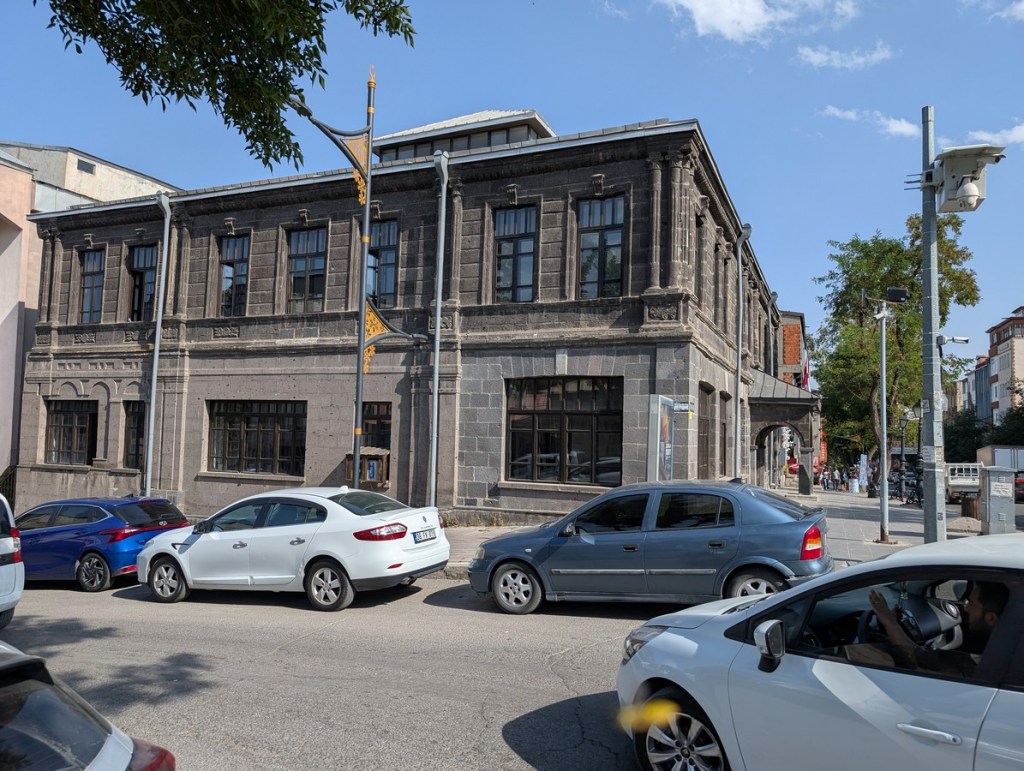
One of the original Russian buildings in Kars

And dotted in around the town are smaller dwellings, some very similar to Russian country homes.
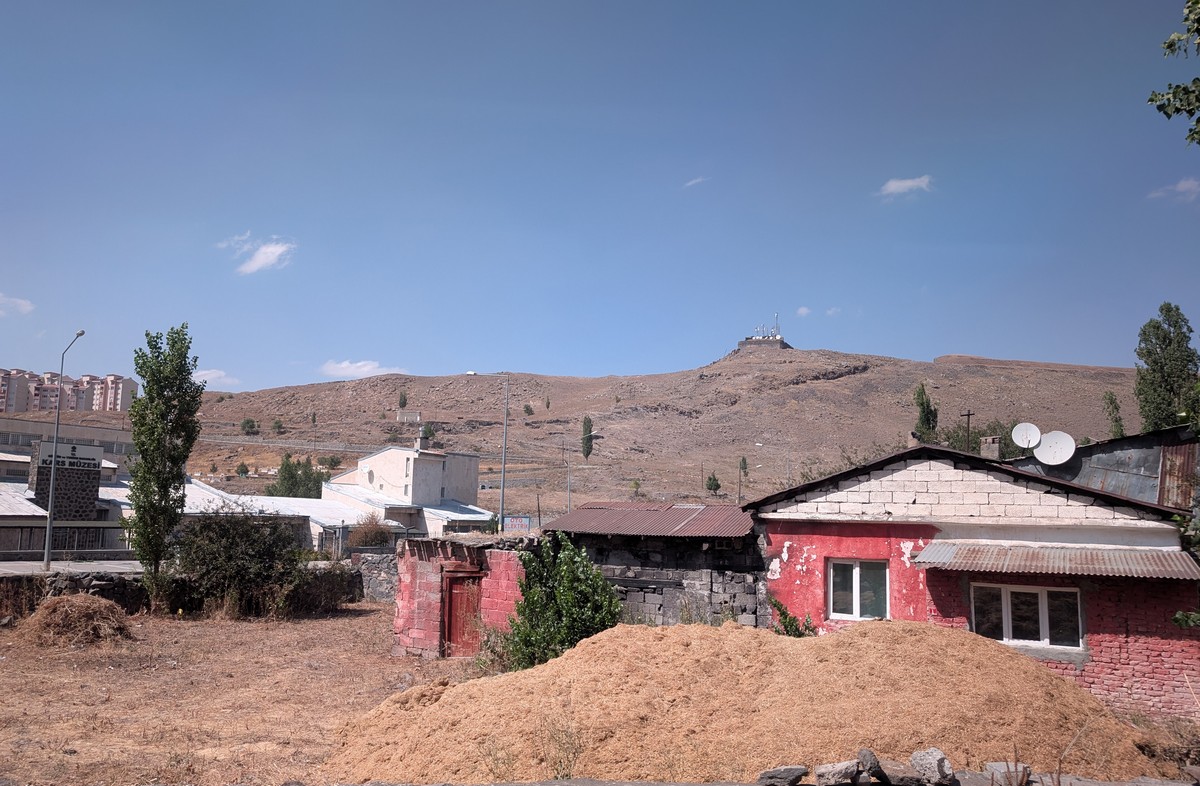
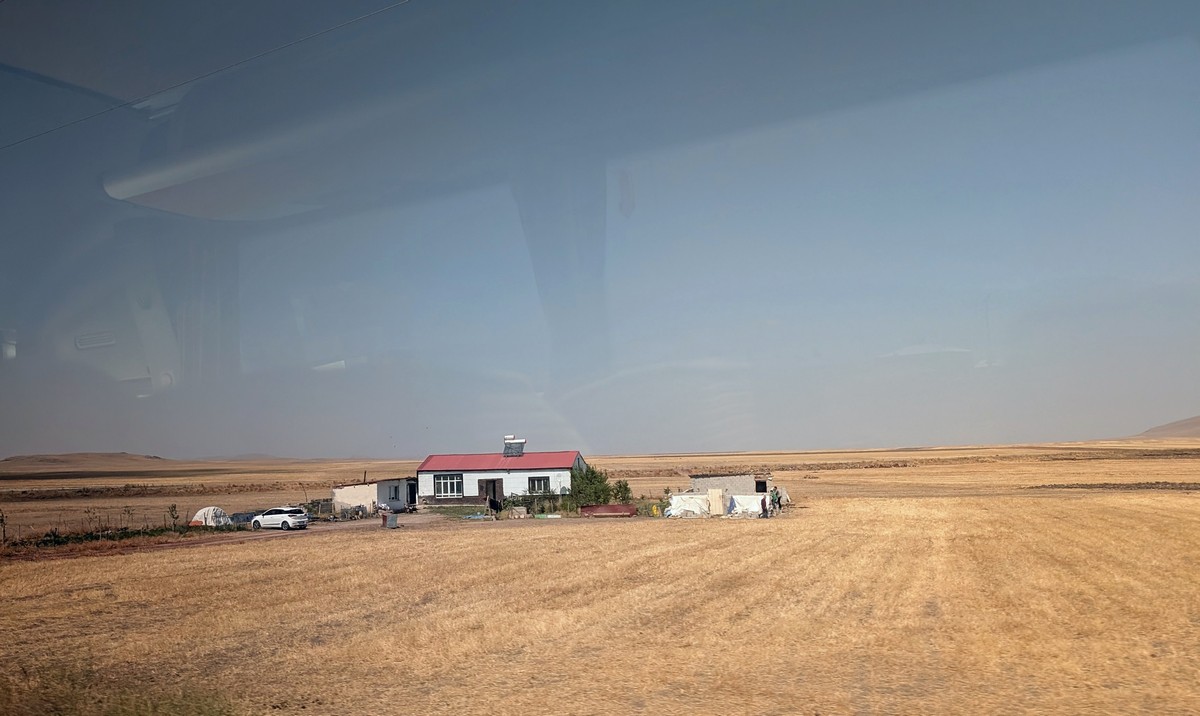
Kars seems to be in a much better state than it was! In 1877, when British Intelligence Officer Frederick Burnaby arrived in the city he said: ‘The streets of Kars were in a filthy state. The whole sewerage of the population had been thrown in front of the buildings.’ Gurdjieff himself described Kars as ‘quite remote’ and ‘extremely boring’, and even the guidebook to Eastern Turkey published in 2014 reported that ‘the mud never seems to disappear’. However, in 2025, after a long hot summer, our group found it a pleasant, quiet, friendly and mud-free town. The residents seemingly know how to enjoy summer, since they can often suffer five months of snow in winter. (Orhan Pamuk’s novel ‘Snow’ focuses on this feature.)
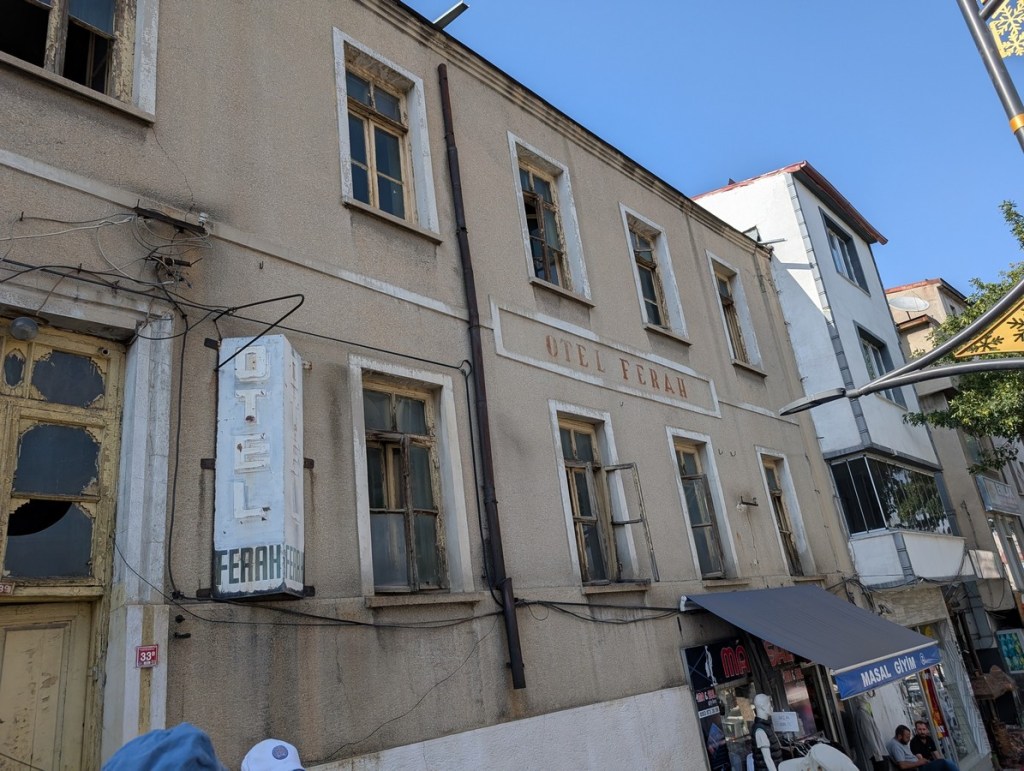
The hotel featured in Orhan Pamuk’s novel, ‘Snow’, now boarded up and semi-derelict. This too probably dates from the Russian era in Kars.

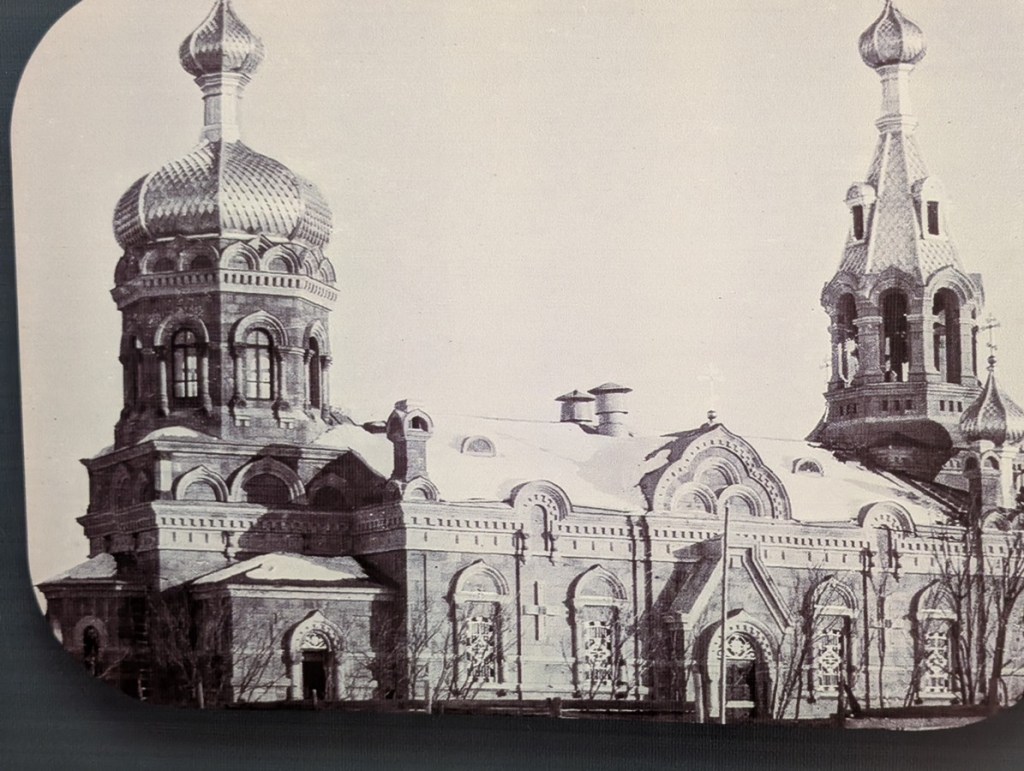
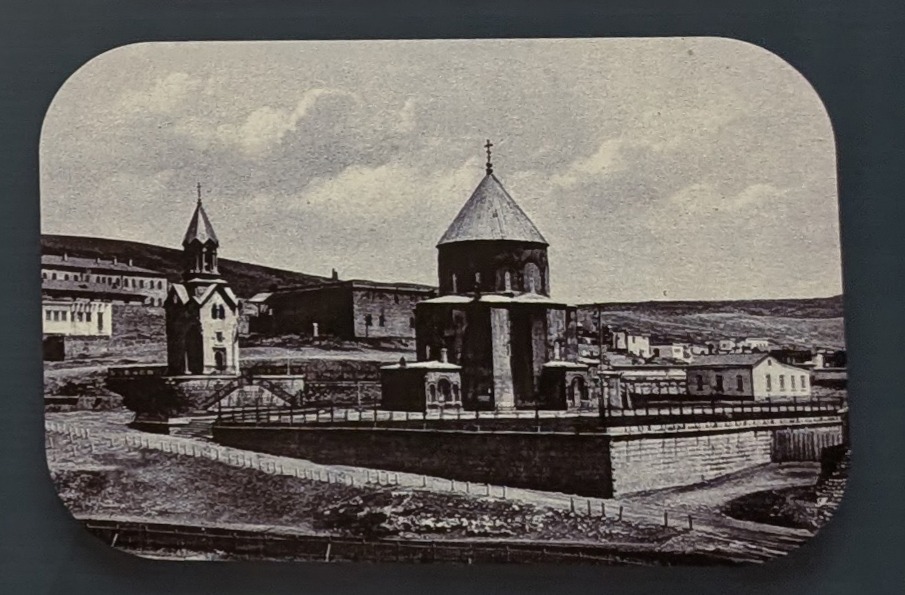
Somewhere here in the town, in a fairly humble dwelling after losing his fortune, Gurdjieff’s father worked as a carpenter, and in Kars itself the young George became a chorister at the Russian Military Cathedral. I asked our guide to take us there; he showed us what is now the Fethiye Mosque. The original Orthodox Cathedral was topped with onion domes and had a parade ground outside; later the domes were stripped off, and it was turned into a sports hall before being brought into use as a mosque. It was moving to step into this space and imagine – sitting on a rather garish blue carpet designed for Islamic prayers – that Gurdjieff had been here again and again for rehearsals and performances. As a choral singer myself of many years standing, I know how much time and commitment this takes.

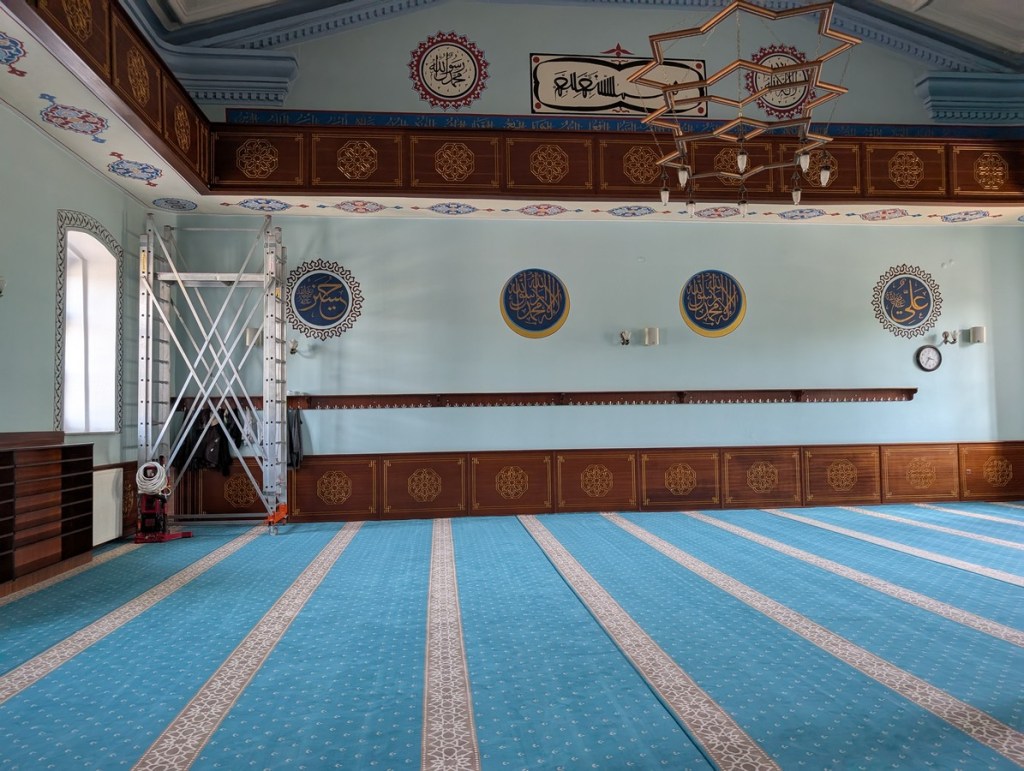
Kars Cathedral as it is today, and below that, the way it used to look
The Russian Military Cathedral at Kars, in its former glory. According to one source, the domes were taken down in the 1960s. (Photo displayed in Kars Museum)

In internet listings for the city, especially those relating to Gurdjieff, there seems to be some confusion between the Russian Cathedral and the Armenian one. This military Cathedral, with its domes and long rectangular shape, in front of an old parade ground, I am reasonably sure is where Gurdjieff sang, and where his tutor Dean Borsh presided. The other contender, the Armenian Twelve Apostles Church is an ancient building dating from the 10th century, sitting near the base of the citadel hill. It’s now a mosque, but with a warm welcome to all visitors. Here, I felt an ancient spiritual presence, something special that reminded me of the chant ‘Lord have mercy,’ which Gurdjieff employed in one of his dance movements and in a wider context. Did he perhaps come here as a boy, and sense this himself?

The Church of the Twelve Apostles, otherwise known as the Armenian Cathedral (now a mosque)

I’ll finish this section on Kars with some old photos from the Museum, showing how the city was in Gurdjieff’s time. Please excuse the quality of these pictures, which not only photos of photos, but I’ve also had to separate and enlarge them from a composite display – the quality is as good as I can get it!
The Ancient City of Ani
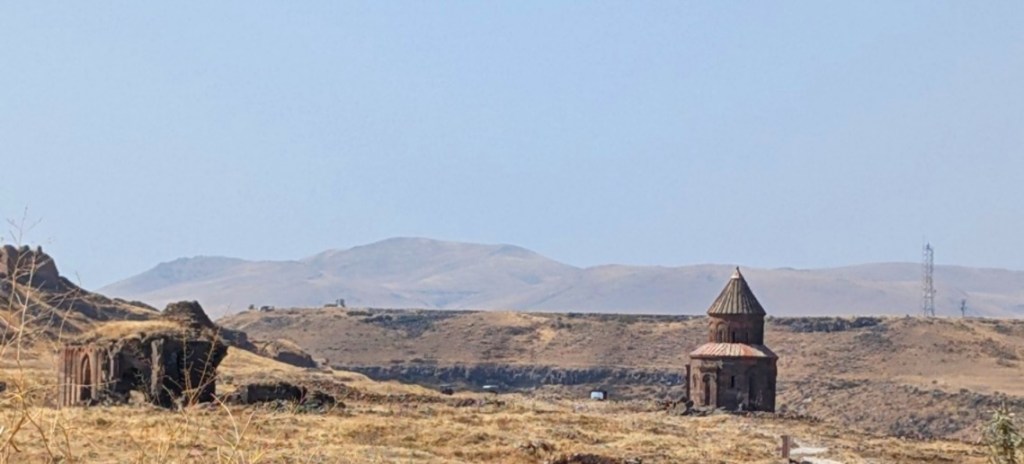
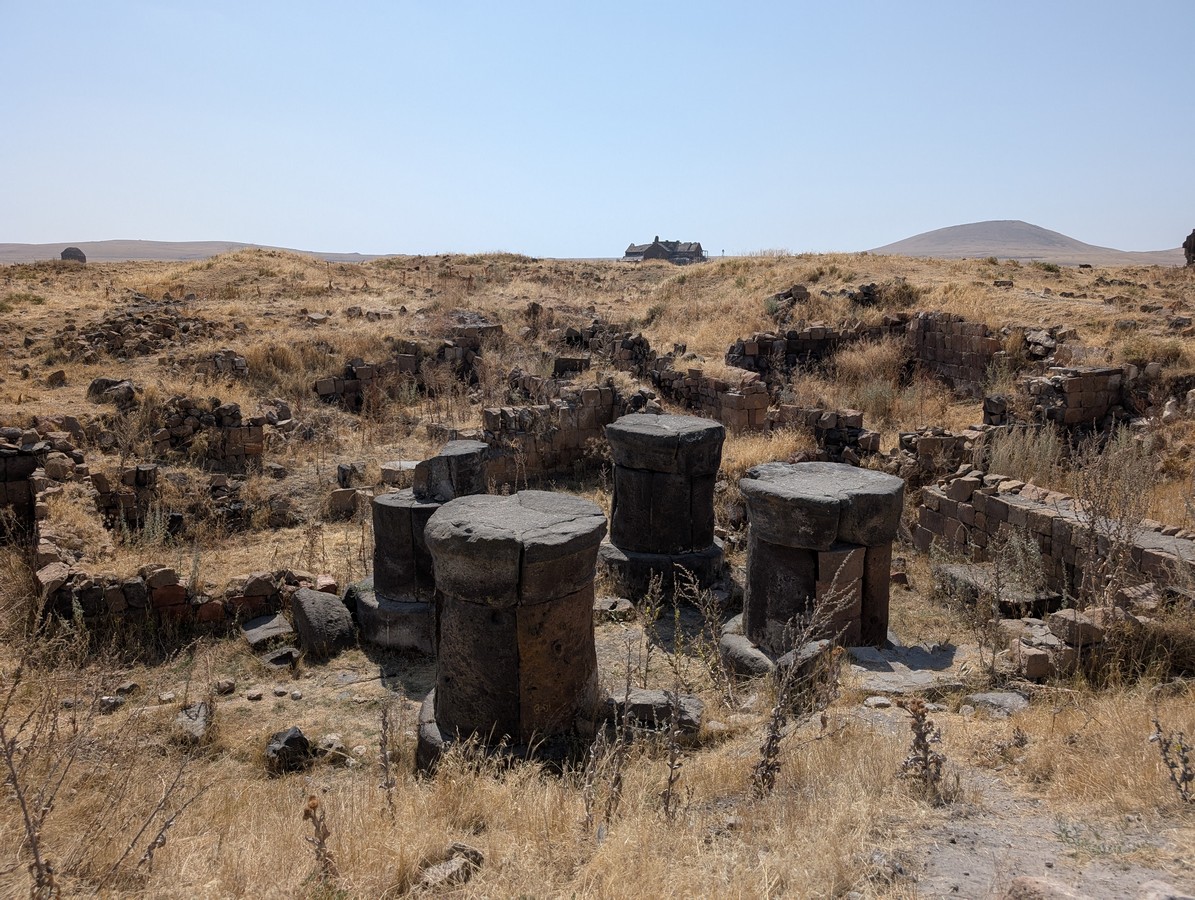
Ani is the most magical of places – a former Silk Road city of ancient Armenia, built around the 10c and deserted in the 14th century after raids and earthquakes decimated it. Today it is just on the Turkish side of the re-drawn national boundary. It’s now carefully conserved and treated as an open air museum. Three hours wasn’t enough to do justice to it.

Below: the city walls, ancient churches, and the remains of a Zoroastrian fire temple, with its four pillars.
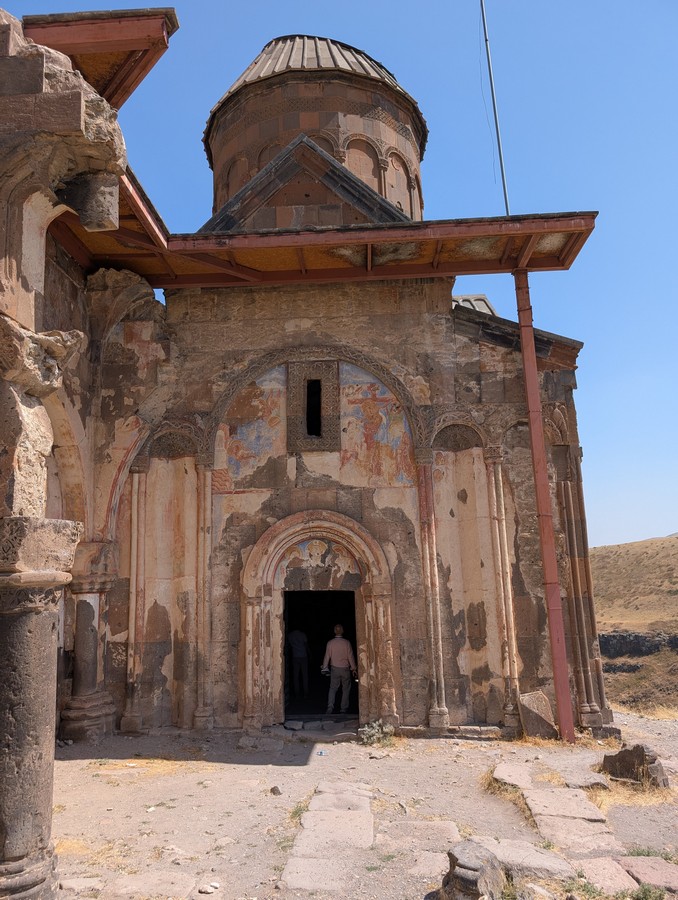
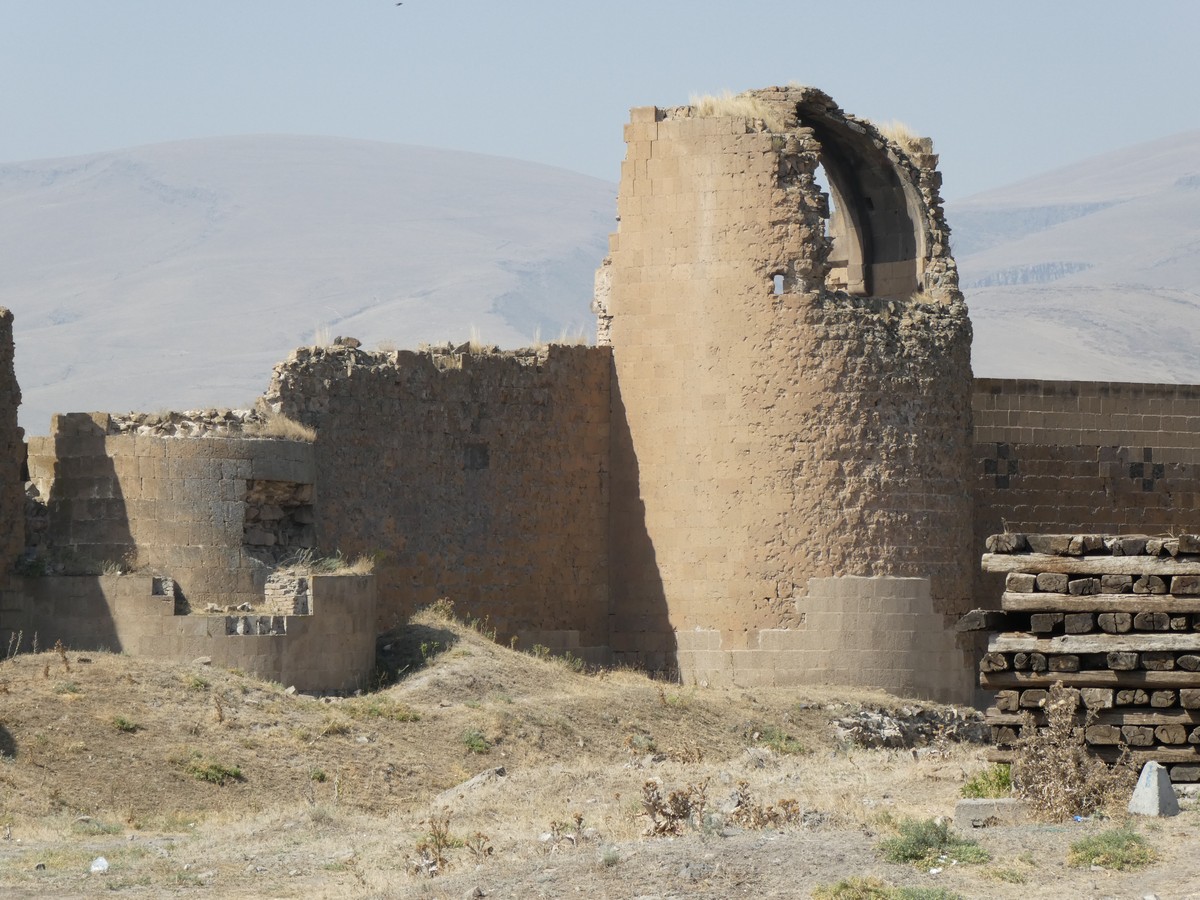
One or two of the churches, ruined or semi-restored, are used as mosques now in accordance with the policy of the Turkish government. The view through the window looks across the river valley straight into Armenia – my phone was convinced I was already in Armenia! It would have all been Russian occupation of Armenian territory in Gurdjieff’s day.

The caves of Ani

Here are the caves which link up with the underground passages which form the substructure of the city, and which played a pivotal part in Gurdjieff’s account of Ani. He and his friend Pogossian were searching for ‘a quiet place where we could give ourselves up entirely to study. Arriving in Alexandropol, we chose as such a place the isolated ruins of the ancient Armenian capital, Ani, which is thirty miles from Alexandropol, and having built a hut among the ruins we settled there, getting our food from the neighbouring villages and from shepherds. ’ (Meetings with Remarkable Men p.87 -Picador 1963)

They lived simply, reading and studying, and doing a little digging around ‘in the hope of finding something, as there are many underground passages in the ruins of Ani.’  They discovered a blocked up monastic cell, and a pile of parchments, some of which could still be read – if only they could understand the kind of ancient Armenian they were written in! They returned immediately to Alexandropol with the parchment so as to get to grips with the translation. When they finally succeeded, they discovered a source of lost knowledge, and a mention of the Sarmoung Brotherhood…’This school was said to have possessed great knowledge, containing the key to many secret mysteries.’ And there the tempting trail begins…the existence of the Sarmoung Brotherhood has been sought, disputed and revered ever since.

Whether or not this tale is faithful to the facts, Ani certainly makes metaphorical sense in Gurdjieff’s search for ancient universal wisdom. As the Unesco website declares: ‘Ani was a meeting place for Armenian, Georgian and diverse Islamic cultural traditions that were reflected in the architectural design, material and decorative details of the monuments.’ And ‘secret tunnels’ long out of use are indeed a verified feature of Ani. ‘The remoteness of the uninhabited city of Ani, with its impressively standing monumental buildings, over an invisible landscape of underground tunnels and caves surrounded by deep river valleys, provides a mostly unaltered window onto the past.’ https://whc.unesco.org/en/list/1518/ I recommend a browse of this website in which even such an official and rigorously factual description of Ani conveys the city’s unique magic and importance as a crossroads of culture. Did G. I. Gurdjieff and Pogossian really discover lost manuscripts? Well, they could have done…that at least is for sure!

We enter a mythic realm with this transition in the book, and whether it rests on literal truth or a kind of metaphorical reality, is up to the reader to decide. The Second Series, Gurdjieff declared, which was the book in question, is intended ‘To acquaint the reader with the material required for a new creation and to prove the soundness and good quality of it.’ We ourselves have to enter that creative dimension, and he gives us a good send-off for our own explorations.

The area is full of mysteries, ancient carvings and strange mythical creatures…

A serpent-dragon-sphinx woman, which neither our Turkish guide nor our esteemed lecturer could identify…she graces the Museum of Kars

The Landscape

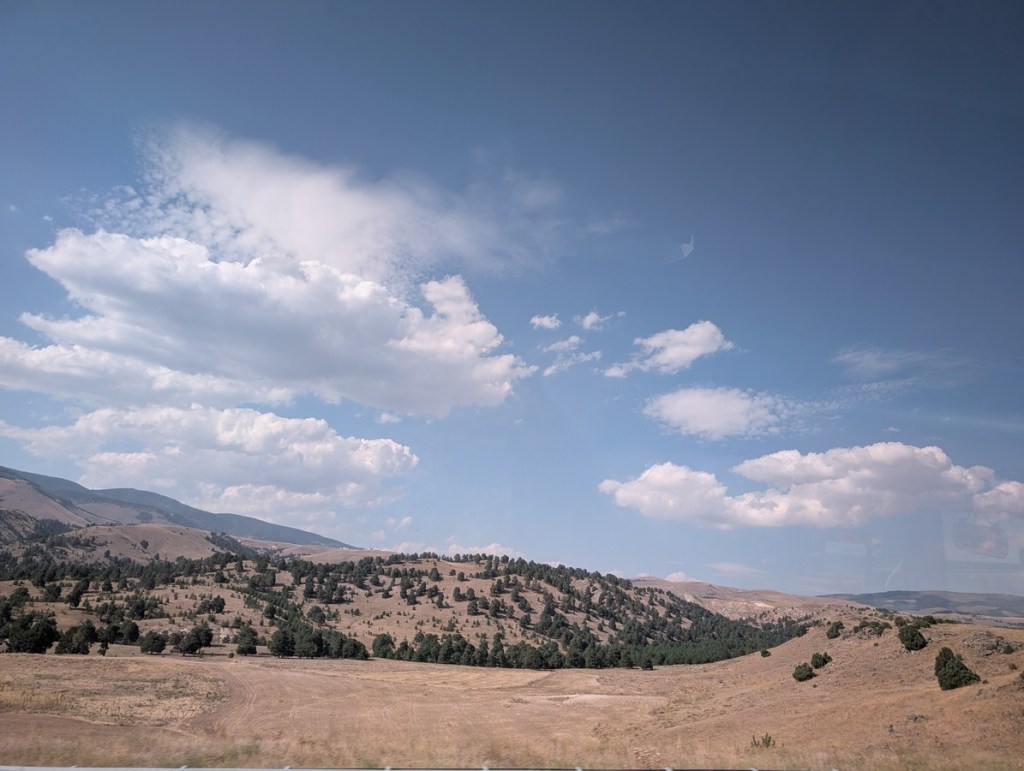
Turkey had endured an extra long and hot summer when I visited, so most of the landscapes I saw were golden brown, apart from swathes of green around water sources. There was a haunting beauty about the empty hills which roll on into to the distance, and awe at the craggy mountains which tower up here and there. Occasionally there were strange geological phenomena, such as the scatterings of obsidian on the road between Erzerum and Kars, and later petrified streams of black magma, rolling many miles away from their source at Mount Ararat. Mount Ararat itself is not too far away, and we glimpsed it like a hazy, snow-capped apparition a couple of days later, in the vicinity of Dogubeyazit.

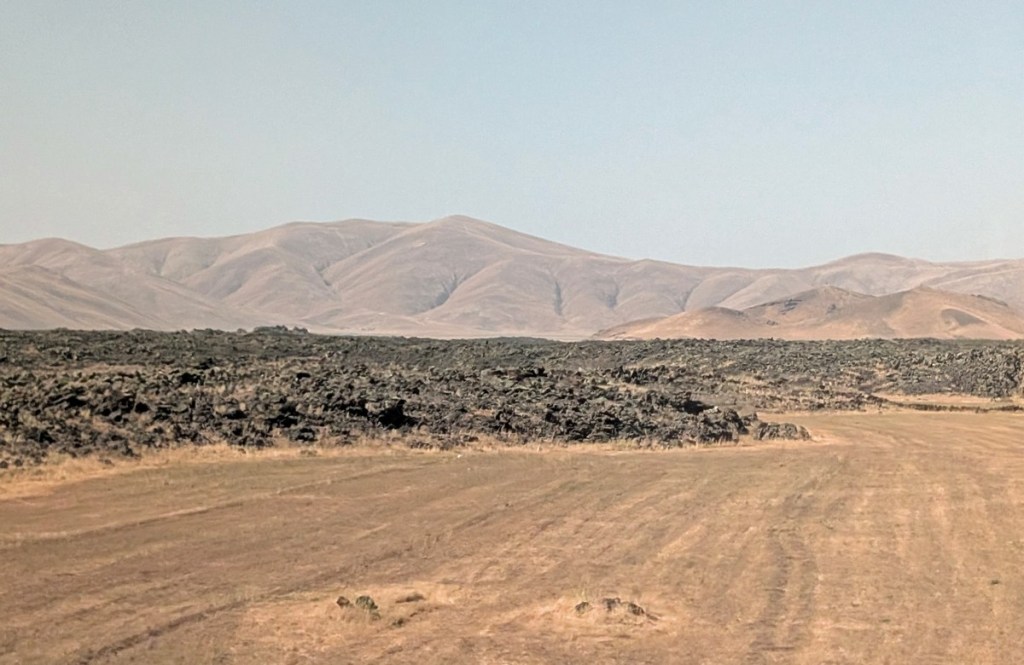
Can you spot Mount Ararat through the haze towards the top of the photo? Climbers take about five days to get to the summit and return back down again. It was snow capped and appeared almost like a mirage behind the lower mountains in the foreground.
The weird, corrugated fields of black magma en route to Tatvan, from some of the last outpourings of Mount Ararat in the 19th century. It’s believed to be extinct now. (‘Believed to be?’ I asked our guide nervously!)

Shepherds and flocks

In the foreground, near the roads, we saw open unfenced land which provides free range grazing for sheep, goats and cattle. Many of these flocks and herds were attended by a single shepherd or cowherd.

The shepherds played a quiet, but significant role in this terrain. And Gurdjieff noticed this, and probably conversed with them on his travels. He once said that a shepherd in the hills could learn far more about meditation in three days than the a modern seeker would in three years! (I’m paraphrasing, until such time as I rediscover the quote.) As we traversed the seemingly boundless landscape we saw such solitary shepherds or cowherds with their animals and they were, as far as I could see ruminating, sitting, or walking slowly – and not glued to a phone. So the conditions are still there for people to have this kind of solitude, which becomes an immersion in the spirit of the landscape, leading to a sense of presence beyond the chatter of everyday life.

The Ashokhs
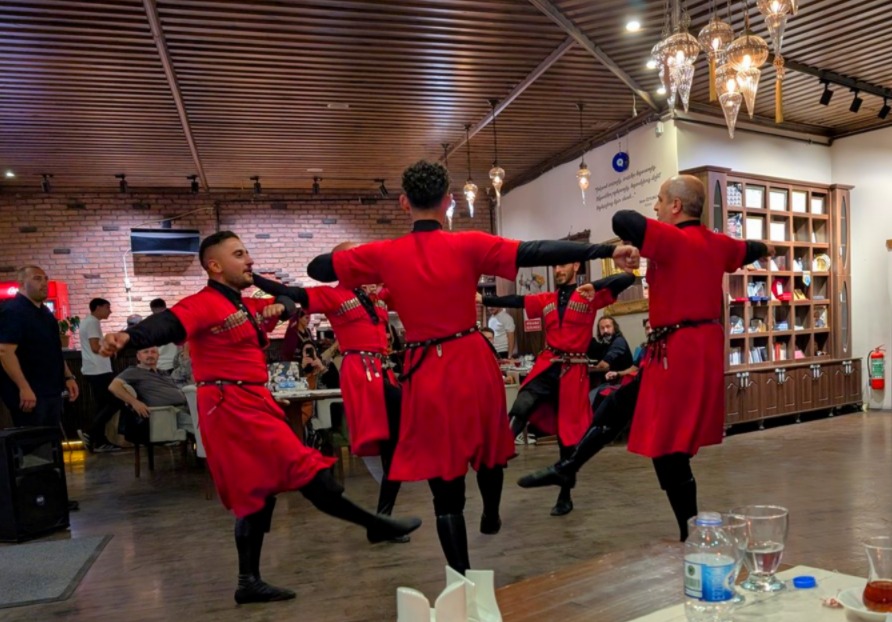
Vigorous dancing at a Kars performance. The agility and ingenuity of the dancers was incredible – Gurdjieff collected such dances and transformed them (both wild and stately) into his range of ‘Movements’, based on traditional, occupational and sacred dancing.
Traditional musicians performing in Kars; they were followed by today’s equivalent of Ashokhs as described below

I had trouble identifying whether the ashokhs – such as Gurdjieff’s father, the bards who were singers and reciters of epic tales – were still known in Eastern Turkey. Our Turkish guide didn’t recognise the word. Eventually I found it listed as ‘Ashugh’ (Armenian) or ‘Ashik’ (Persian). Most of Gurdjieff’s territory from his boyhood was Armenian, even when occupied by Russians.

And I did find traces of the tradition. One evening, in Kars, we booked a special restaurant dinner and performance, with what turned out to be amazing leaping dances, and ‘a contest’ between two singers, playing traditional instruments (ud or saz). Was this a remnant of the old ashokh contests, which Gurdjieff and his father attended? It could well be. I asked the guide, who explained that yes, they were – in my words – slagging each other off, and vying to out-sing each other, with good humoured insults and bravado. The songs seemed to be love songs without any hint of the epics which Gurdjieff described, but this was probably only one example of today’s performances. I’ve since learnt that there’s a cultural centre in Kars, where ‘Ashik’ performances happen every day, to keep the tradition alive.

This rather raucous snatch of video which I took features two modern day ‘ashokhs’ in a singing contest

Gurdjieff tells us that he and his father travelled to Van for an ashokh contest, so I was curious to see the city, which is where we spent the last three nights of our tour. Van itself is still a very lively place, where people of different cultures meet. In Gurdjieff’s time it was an Armenian province, although Armenians themselves were in the minority. Today the majority of the population are Kurdish, who are outgoing and friendly to visitors. There were very few of us on the streets who’d come from Europe; the majority of today’s visitors pour over the border from Iran, eager for night life and (comparative) freedom!

Below: Varied views of Van, including my hot but triumphant climb to the top of the fortress!

The vast lake is known as the ‘Sea of Van’ as you cannot see the other side of it on the horizon. It’s ‘silky’ to some swimmers, ‘oily’ to others , and only one kind of fish can live in its alkaline waters, a kind of mullet which we sampled for lunch one day. (Rather like bland sardines.) There were however a few flamingos around the lake, and I saw a small group of bee eater birds, with their exotically iridescent plumage. I was also super keen to meet a Van Swimming Cat, a white, long-haired breed, who often have different coloured eyes (eg one blue, one green) and a penchant for water. We did see a few in a cat shelter, where they are trying to save and conserve the breed. Gurdjieff, fond of animals, might very well have encountered one of these. I was wondering why they are white, until I remembered the five months of snow in the region! Good camouflage.
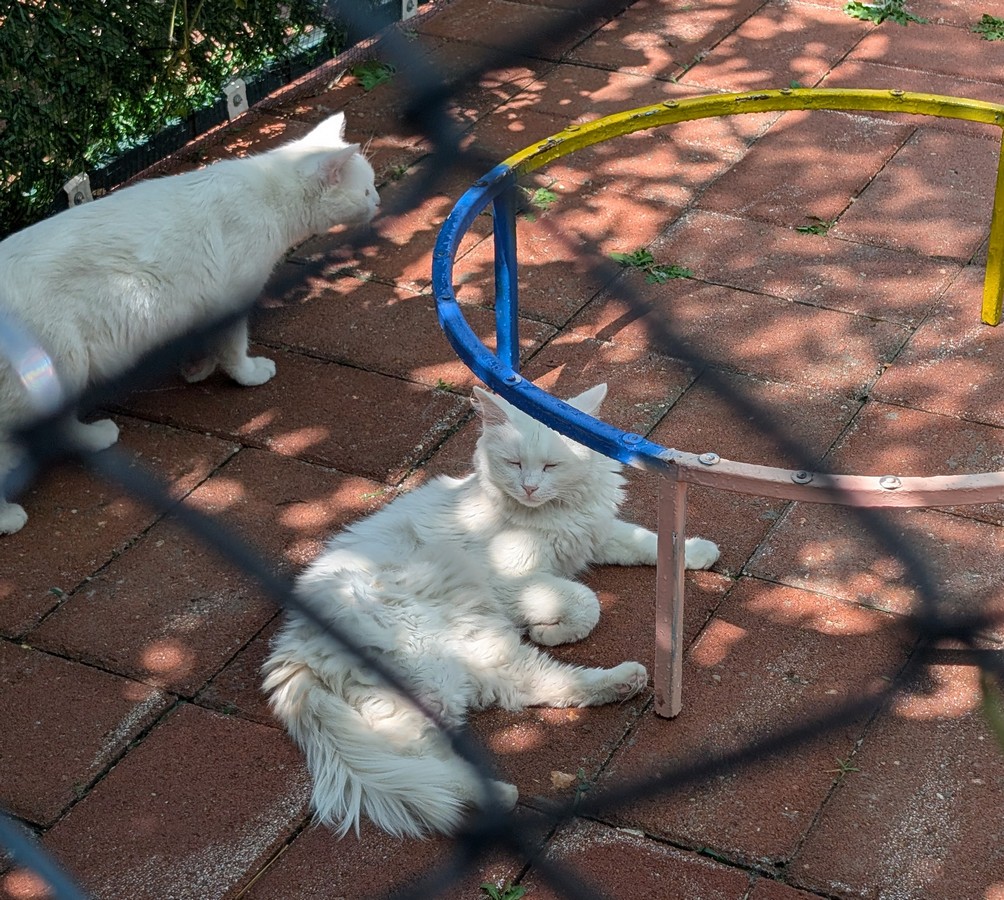
Van ‘Swimming’ Cats – on land they would be well disguised in the winter snow!

The Urartians

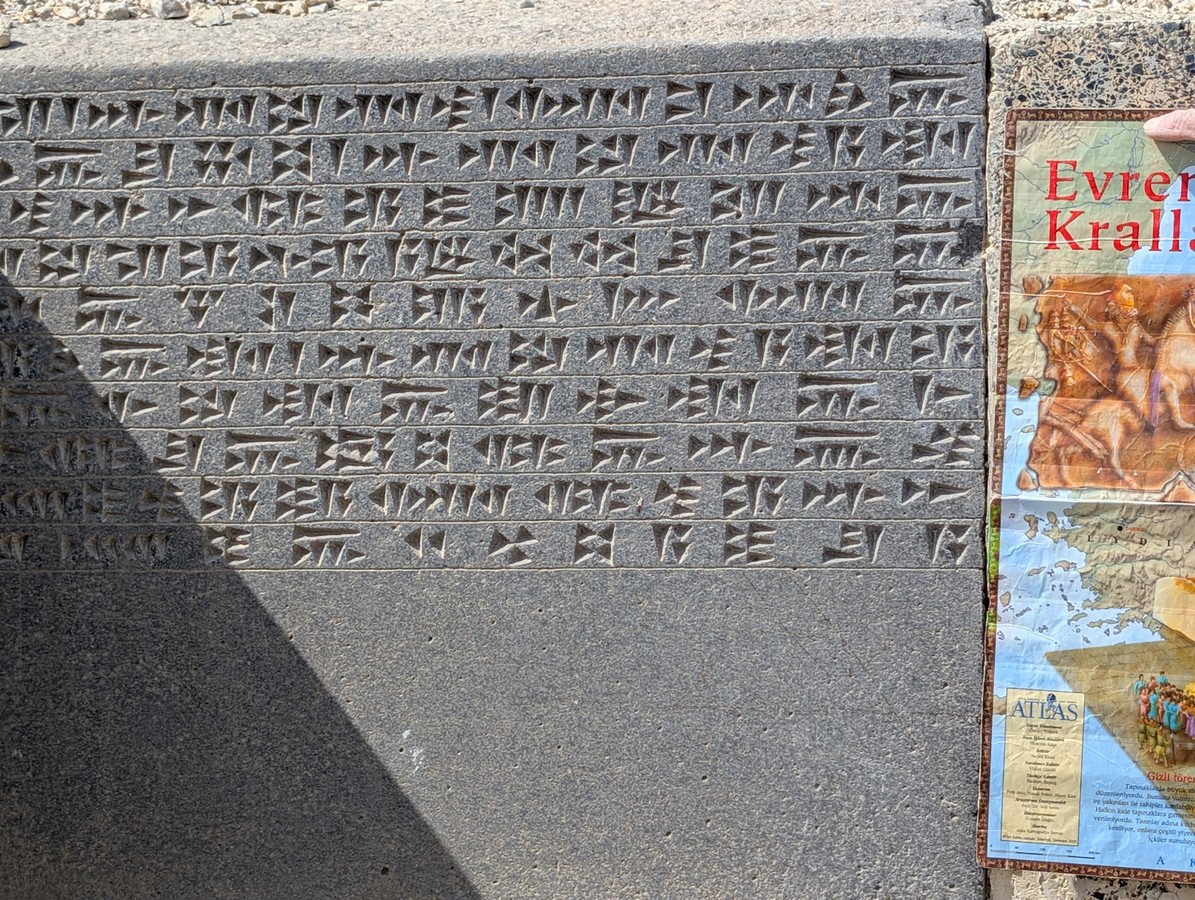
Van in ancient times was called Tushpa, and was the capital of the Urartian kingdom, which existed between about 900-600 BC. This fascinating culture was richly endowed with a multitude of deities, of whom the chief was Haldi, the sun god; they possessed a cuneiform language, found engraved into stone, and were both neighbours and enemies of the Assyrians. Their citadels were often built on mountaintops and we visited one such, at Cavustepe. It was wonderful experience standing on top of the mountain ridge, surveying the valleys below and the hills and mountains beyond. A sense of being proud, and free. Here, an 85 year old guide showed us around; he had worked at the site with the archaeologists for 70 years, and deciphered the cuneiform script, on which he is now the world’s leading authority. Mehmet Kushman is coming to the end of his active life, and we were privileged to walk through the high reaches of Cavustepe with his knowledge and guidance. I asked him in a quieter moment, if he ever felt the presence of the Urartians around him there. He paused for a moment, then with dignified emotion and a half laugh, declared, ‘I am Urartian!’ I believe him.
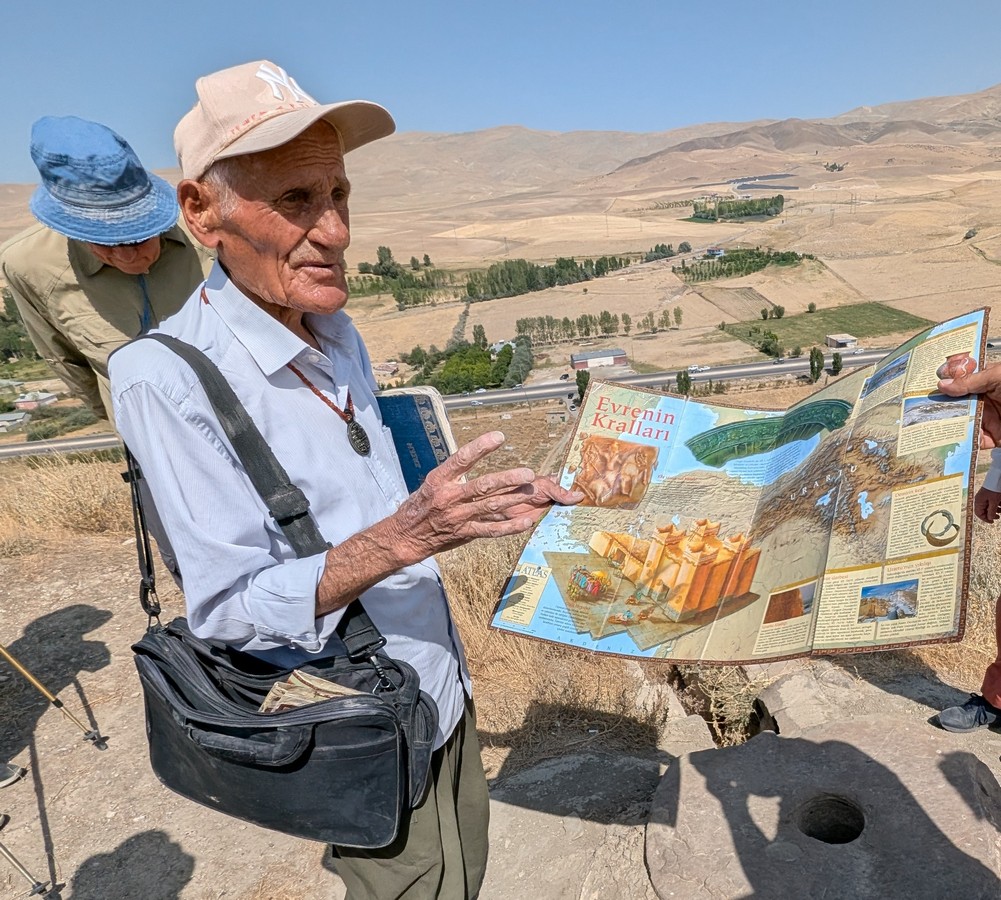
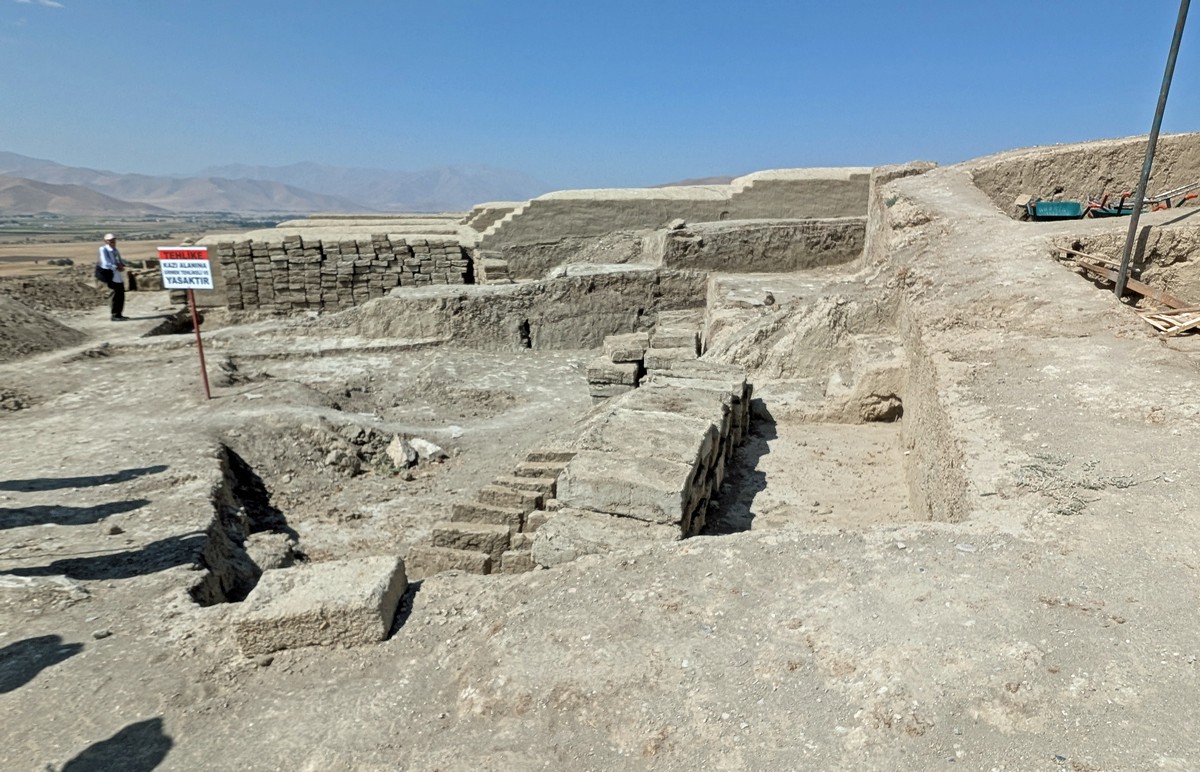
Would Gurdjieff have visited some of these mountain fortresses? Most probably he would have climbed up the one at Van, as we did – a real trek in the heat! Did he know about their culture? Perhaps not, but it’s certainly in keeping with the sense he engenders for us of ancient peoples, hidden sources of knowledge, and lost kingdoms.
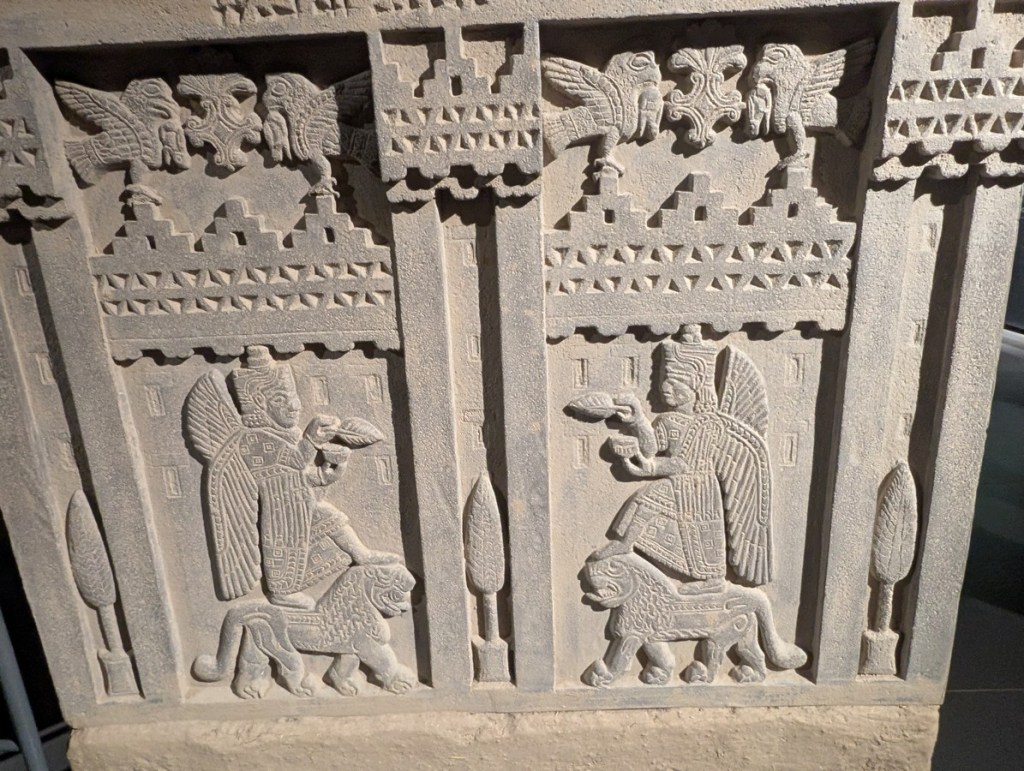
An Urartian carving in the Museum of Van

My trip has left me with a yearning to keep something of the spirit of this place in my soul. And perhaps to follow it up with a trip to Georgia and Armenia. Seeing places which have inspired writers and teachers of wisdom can be both moving, and profoundly instructive in a non-verbal way. I have a better sense now of where this particular line began.
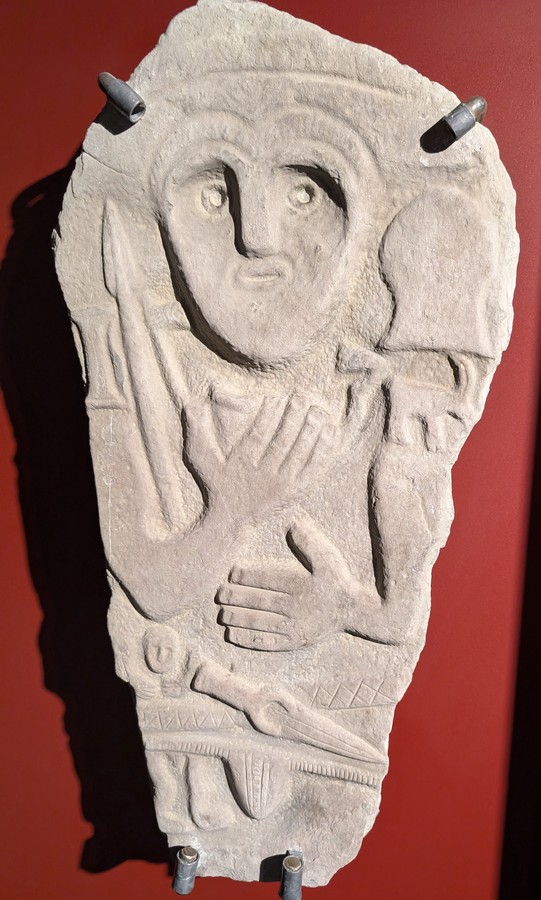
A mysterious stele, one of a number in the Museum of Van, thought to be created by nomadic peoples of Mongol origin

Who was Gurdjieff?

For anyone who hasn’t encountered Gurdjieff, here’s a brief resume: George Ivanovich Gurdjieff was a Greek-Armenian philosopher, traveller and teacher, who lived from around 1866-1949. He came from a Christian Orthodox family, but sought out teachers and sages who could instruct him in ancient wisdom, which he then absorbed, researched and formulated in his own way. Perhaps it’s fair to say that the core of his message is to ‘wake up’ from the sheep-like state we live in much of the time, in order to realise our full being, and allow the self to ‘remember’ its true nature. Although not mainstream, his teaching has had a great impact on 20th century systems for personal spiritual growth. He brought the ‘enneagram’ into public view, now extensively used in psychotherapeutic contacts. His methods are usually taught as ‘The Gurdjieff Work’.

My own connection: While my own path has been chiefly in the tradition of Western Tree of Life Kabbalah, I have also been a member of groups studying Gurdjieff’s writing and his dance ‘movements’. I’ve also read and re-read his books over the last fifty years, plus practically all the memoirs written about him. I am not a fully-fledged Gurdjieffian, but I admire and respect his teachings.

‘Meetings with Remarkable Men’

The places featured here are those mentioned in Meetings with Remarkable Men. Here, in the ‘Second Series’ which follows Beelzebub’s Tales, Gurdjieff describes his early life and some anecdotes from his boyhood, followed by a search for truth and ancient teachings as a grown man, in remote areas of Central Asia and beyond. Was this memoir a genuine account of his life and wanderings? My own view is that many of these ‘later ‘meetings’ from his adult years are most likely to be fictionalised, semi-mythic accounts of what may have been real events. They convey their own truth, but not in literal form, But I know of no reason to doubt that most of his descriptions of his childhood and adolescence are genuine memoir. His visit to Ani – again in my own opinion – is one most probably based on his personal knowledge of the ruined city, which was within easy reach of his two home cities, Kars and Alexandrapol. What he found there is a matter for speculation!

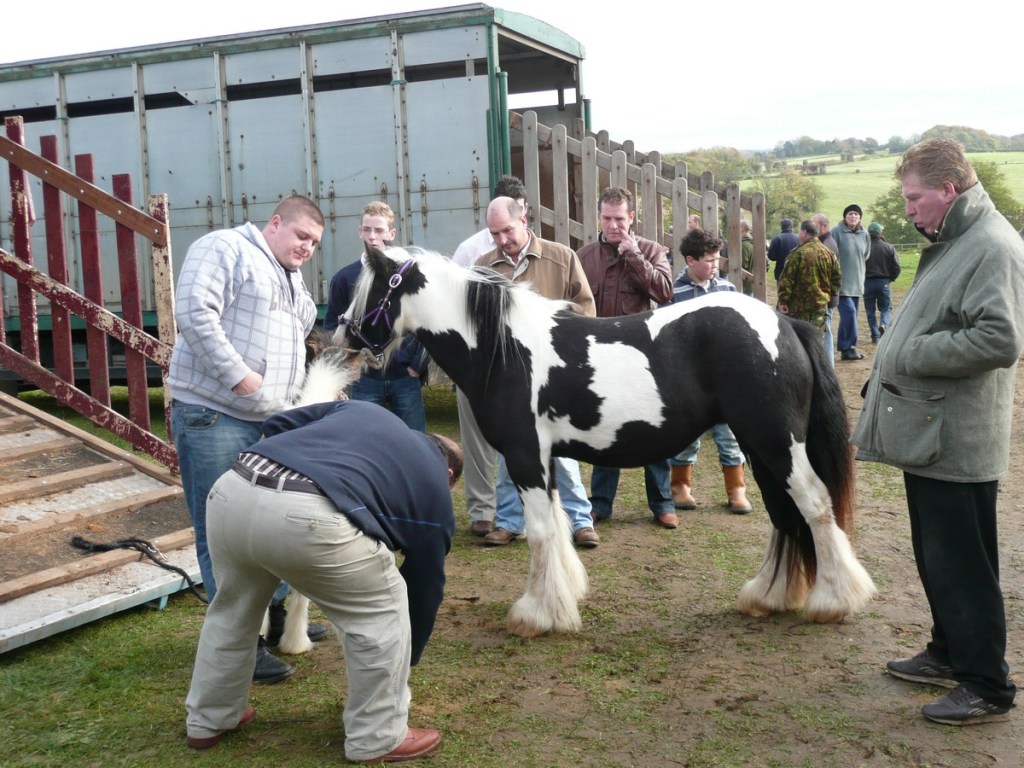
At the Horse Fair, in Stow-on-the-Wold

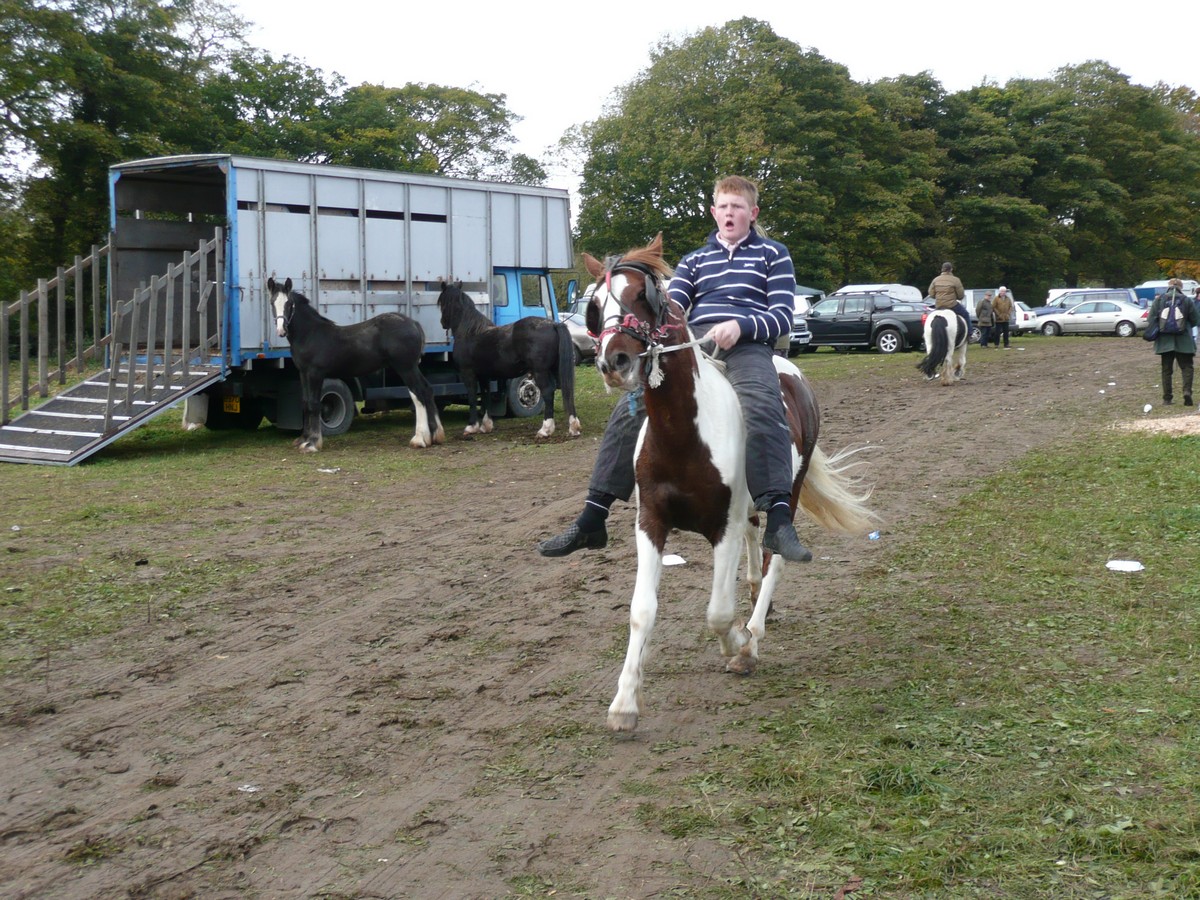
Here’s my visual impression of the Horse Fair at Stow-on-the-Wold, a famous gathering each year where Romanies and travellers traditionally meet to trade their horses. The post is a tribute based on my own visit to the fair, fuelled by a fascination with such gatherings, rather than any specialist knowledge. We visited quite some years ago, and it may have changed somewhat since – though looking at other blogs and videos, not too much, it seems!

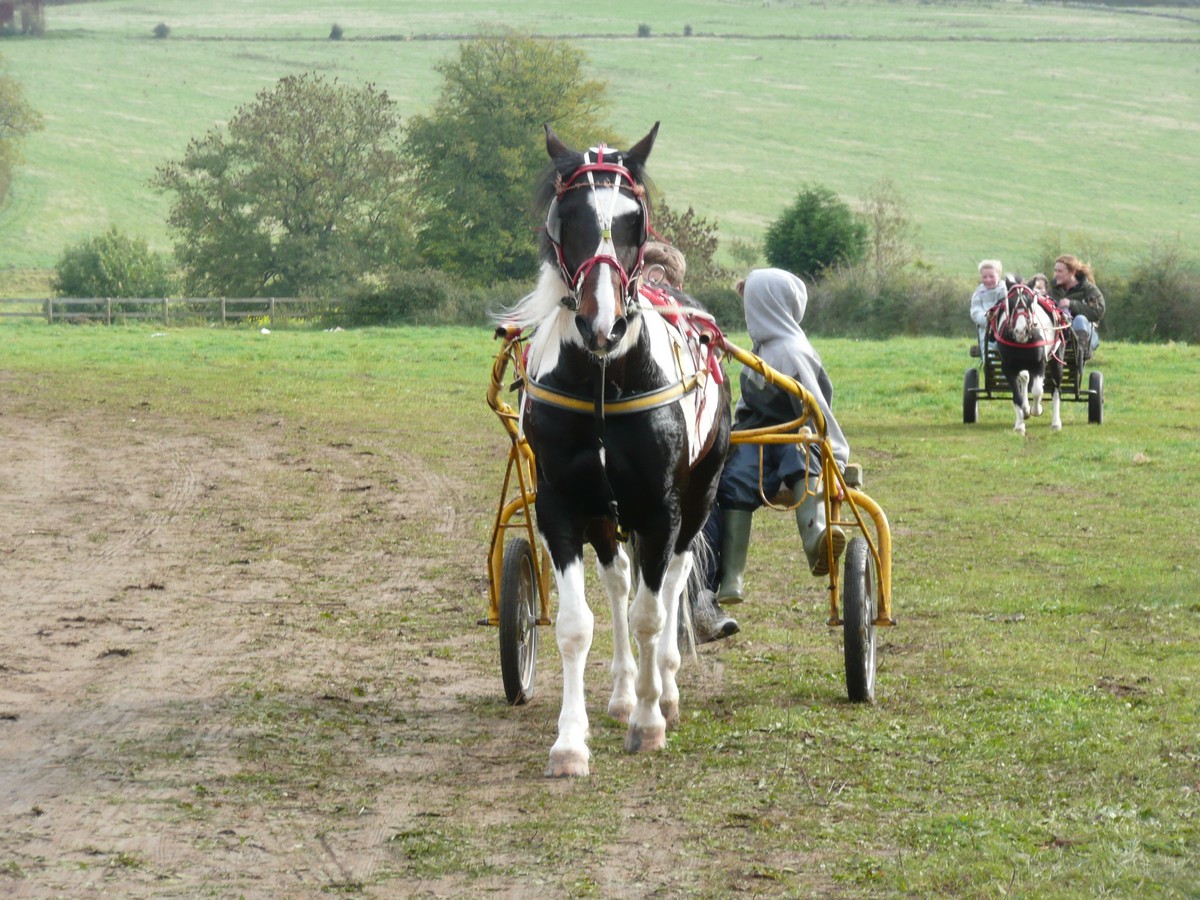
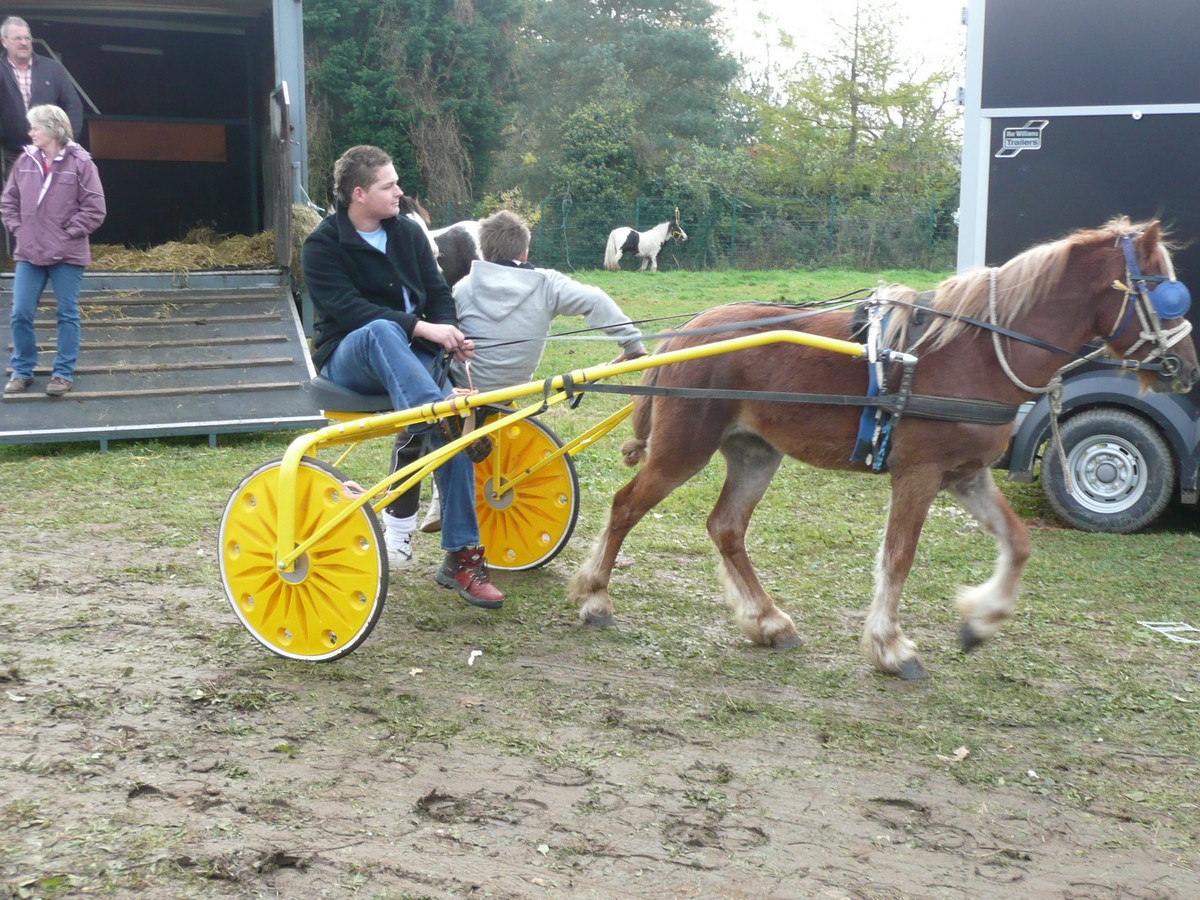
A chance to try out and indeed show off the pony traps, sometimes known as the ‘flash’

I have always been fascinated by accounts of gypsies. As a young student, I listened at first hand to folk song experts Charles Parker (BBC Producer of the Radio Ballads) and his singer friend Ewan McColl talk about their experiences of collecting songs from Romanies and travellers. They laughed affectionately about ‘Queen Caroline Hughes’, for instance; Queen Caroline was paid by them per song, and so she craftily mixed together verses from different ballads, producing new ones on the spot! The Ballad of ‘The Travelling People’ had just been recorded, and is still a classic production today. The most iconic song from it – ‘Born in the Middle of the Afternoon‘, which you can listen to via the You Tube link below. And a good write-up of the making of the ballad itself can be found here.
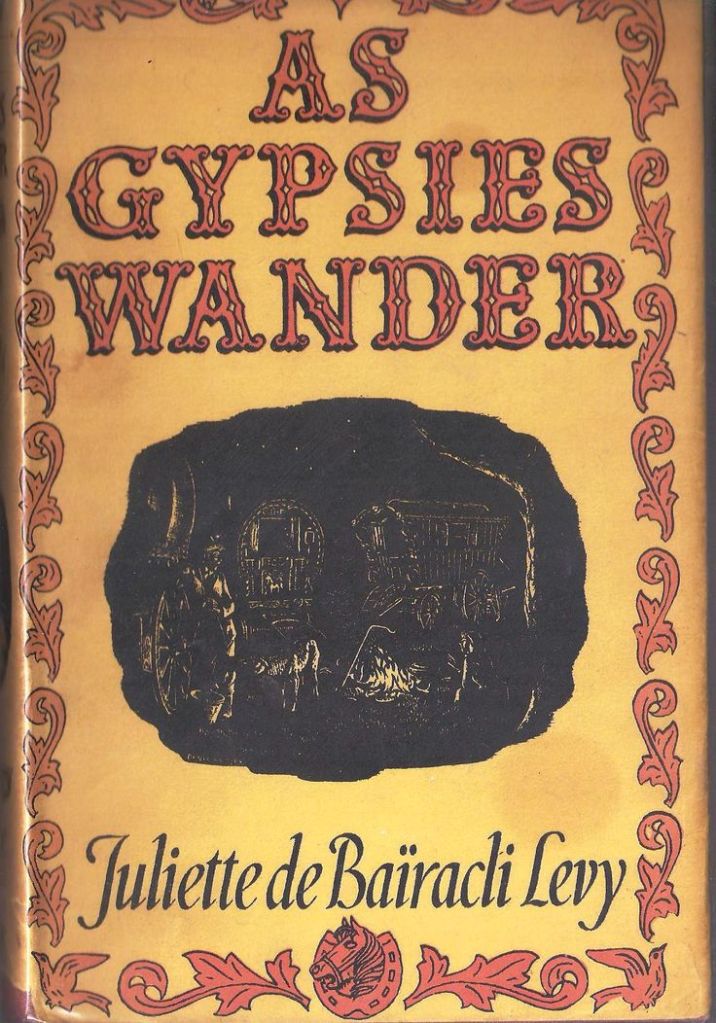
Trading on their names – I did indeed know Charles very well – I visited their friends the Stuarts of Perthshire, a family of settled travellers with warm hearts and hospitality for all comers. Later, I avidly read Juliette Baraicli-Levi’s first hand account of living alongside gypsies and studying their herbal lore. (I am saving Juliette Baraicli-Levy herself for a future ‘Wild Women’ blog, so will only mention her in passing here. Her herbal handbooks are still used as sources of wise information and advice.)

I’ve also sought out the chance to visit nomads in Turkey, Western China, Uzbekistan and Kirghistan, and retain cherished impressions of these. And I have treasured the experiences of watching women weave on portable looms, drinking ‘kumiss’ (fermented mare’s milk – very nice, actually) and climbing on a Kirghiz horse, ready in my imagination at least to gallop off into the rolling hills. Ah well!

With nomad Kirghiz horsemen by Lake Issyk-Kul, Kirghiztan

So my qualifications for writing about nomads or gypsies are personal, and wouldn’t hold water in any serious studies of the culture. But I can share some of these impressions with you, with my photographs of Stow Horse Fair, taken on a visit over a decade ago, and also make a few comparisons to other cultures.

There are usually a few traditional gypsy wagons or ‘vardos’ at the fair, but not many on our visit.

Why Stow-on-the-Wold?

Stow-on-the-Wold today is a small and charming town which has long served as a junction for several ancient routes traversing the Cotswolds, the hills in Gloucestershire and beyond. It was always well-placed, therefore, for trading. Some of the earliest goods carried along these roads were salt, fish, iron and charcoal, and its famous Fair goes back nearly a thousand years, with its official charter granted in 1107. The medieval wool trade boosted the Cotswold economy, and Stow became a centre too for not only local cloth and leather goods, but exotic imports such as silks and spices. (Another contender for the place which marks ‘the end of the Silk Road’, perhaps?)

After the wool trade declined, horses became the all-important commodity, and the October Stow Fair (held on or around the feast day of Edward the Confessor) established itself as one of the prime horse fairs in the country. Although the main horse sale has now been transferred elsewhere, this doesn’t seem to have stopped the private wheeling and dealing which was certainly apparent when we visited the fair. (You can read more about Stow and its fairs here .)

Below: horses put through their paces, tried out for riding and for pulling the different types of gypsy carts

A Gypsy Gathering

Today it’s also one of the major gypsy fairs and get-togethers nationwide, along with the better-known Appleby Fair in Yorkshire, and the Midsummer Fair in Cambridge. However, the Cambridge fair wasn’t a horse fair as such, as far as I’m aware, unlike Stow and Appleby, and has declined somewhat in recent years. To digress slightly, when I lived in Cambridge in the 1970s, at fair time the eponymous Midsummer Common was always crowded with a mix of showmen, travellers and locals. Stalls competed with dazzling displays of sparkling crystal, Crown Derby china, and elaborate ornaments of horses and the like, which were all beloved by the gypsies. It was a funfair too, where I was delighted to find some very ancient slot machines including what was most probably an Edwardian ‘What the Butler Saw’ peepshow. Showmen families were prominent, as well as gypsies, and there was always a special and well-attended outdoor Sunday service for all the travellers there.

Once, we saw Romanies of a kind that I have never encountered before or since – dark, lithe folk, talking in their own language, and squatting in in a circle to share their news. Were these perhaps ‘true’ Romanies, maybe from Eastern Europe, or Spain? British gypsies and travellers are only branches of a much larger clan – Juliette de Baraicli Levy writes about her time with traditional Spanish gypsies, along with those she met in the New Forest in England, and even in New York – which, surprisingly, hosted large colonies of gypsies earlier in the 20th century.

And in southern France too, the town of Les Saintes-Maries-de-la-Mer hosts gypsy gatherings to celebrate the Black Madonna who lives in the crypt of the church. It’s a town well worth visiting, as Robert and I have done, but we haven’t yet seen it at festival time – we’ve been tempted to travel there then, but I’m not sure we’d stand the pace now! Revelry continues 24 hours a day…

The haunting face of ‘Sara’ the Black Madonna, patron saint of gypsies, at the church of Les-Saintes-Maries-de-la-Mer in the Camargue, France. (Author’s photograph). Thousands of gypsies pay homage to her, both at the festival and throughout the year.

The Deal

There is indeed something universal about the trading that goes on among nomads, travellers and gypsies. I’ve observed striking similarities between the deals being done among the Uighur people of Western China, who I visited in the 1990s, and the horse-dealing in Stow. Look how intent the men’s faces are in both cases – keenly observant, guarded, speculative, concentrating fiercely on the potential deal to be done. And giving nothing away until they’re ready to seal the deal.

The pace can be fast in both venues too. In Kashgar, I nearly got knocked down by a Uighur horseman galloping his prospective purchase down the track. It was a bit like stepping inadvertently onto a racecourse. This young man at Stow seems pretty determined too.

The women of the fair

Admiring babies – note the old-style pram, which is still prized by travellers. The adornment of the pram can be a serious matter too, where the baby can be shown off in splendour. You can even find ‘Romany Pram’ as a category on EBay – eg at https://www.ebay.co.uk/b/bn_7023493960.

And what of the women? Well, many of them were dressed to the nines, and plainly enjoyed showing off their babies and catching up with the latest family news. But it wasn’t all cuddly infants and fancy outfits – as we stood at the top of a slope, looking down across the busy fairground, we noticed a sudden eddy of disturbance below, parting the crowds. A fight had broken out between two women, and people close by formed an impromptu wrestling ring for them. . The spectators rallied to the cause, shouting and cheering on two women who were going for each other hell for leather. For what, we shall never know – a rival love interest? An insult to the family? Faithfulness to a husband and loyalty to family are key principles among gypsy women. But we can be sure that, whatever the cause, these are fierce ladies, not to be taken lightly.

Above: The downward path where the fight took place and below, women taking time out together in the town centre

Below is a video, well worth watching, about how the Stow Fair has changed over the last few decades.

All such gatherings of nomads, traders and gypsies are likely to change over time, with a likelihood in the modern period of curtailing their age-old fairs and markets. I have visited the great Sunday market of Kashgar twice, but its splendour has since been diminished by the more recent persecution and forced detention of Uighurs in Western China. And a friend who used to visit Stow fair many years ago, remembers caravans parked all the way along the main road, a magical sight in the evenings when every van had a fire lit beside it, and people sat round to tell their tales. That practice has been stopped, and parking is strictly regulated now. Locals are not always happy to have their town taken over and new curbs are brought in.

The roadside fires may have gone, but the horses and the faces of character remain

But I hope the tradition of the Stow Horse Fair will carry on from one generation to the other. And if the opportunity is there, I may go and take another peek in October 2024!

On the Ancestral Path

Ancestral stone figures on Easter Island

In the last post, I suggested one way in which we can get to know our ancestors, by plotting the relationships between us, and contemplating the circle which they form around us. This current post now moves away from the charting of ancestry, to focusing on some of its spiritual aspects, and considering whether our line of ancestry may still play an active part in our lives.   As we now head towards Halloween, based on the ancient Celtic festival of the dead, it’s the season to speculate more about the possible dimensions of life and death, and how we may connect to these.

I’ll also mention the role of shamanism in connecting us to our ancestors. Shamanism is, in essence, an ancient belief system of inter-penetrating worlds of spirit, in which we can play an active role. It includes both animate and inanimate forms of life, in modern terminology, and the realms of both the dead and the living. The ‘religion’ of shamanism – using the term loosely, for there are many versions of it – may once have been widespread throughout the world in its various forms, fundamental to many if not most cultures, including the greater part of Europe. And it contains the belief that journeying between these worlds is possible, often with the assistance of a shaman. Although such travelling must be done with care, it can help us to access knowledge, including foreknowledge, the power of healing, and positive forces which can guide us through life in this middle world.

Birds are often thought to represent the flight of the soul – (illustration by Helen Cann, with artist’s permission)

The otherworld of the ancestors

In the Western world, although this shamanistic world view has largely been abandoned, there are still traces of it in folk lore and myth, as reflected in this ancient poem from the north of Britain. It reveals that a soul must travel a particular path at the time of death, to make the transition between worlds and reach its new dwelling place. Here in the poem, this sanctuary is that of Christ, combining the older world view with that of Christianity. (See Jeff Duntemann’s post ‘Understanding the Lyke Wake Dirge’ for a translation into modern English.)

A Lyke-Wake Dirge

This ae neet, this ae neet, (night)
Every neet and all,
Fire an' fleet an' candleleet,
And Christ receive thy saul. (soul)

If thou from here our wake has passed,
Every neet and all,
To Whinny Moor thou comes at last,
And Christ receive thy saul.

And if ever thou gavest hosen or shoen, (shoes)
Every neet and all,
Then sit ye down and put them on,
And Christ receive thy saul.

But if hosen or shoen thou ne'er gavest nane, (none)
Every neet and all,
The whinny will prick thee to thy bare bane, 
And Christ receive thy saul.

From Whinny Moor when thou mayst pass,
Every neet and all,
To Brig o' Dread thou comest at last,
And Christ receive thy saul.

From Brig o' Dread when thou may'st pass,
Every neet and all,
To Purgatory thou comest at last,
And Christ receive thy saul.

And if ever thou gavest meat or drink,
Every neet and all,
The fire will never make thee shrink,
And Christ receive thy saul.

But if meat nor drink thou ne'er gav'st nane,
Every neet and all,
The fire will burn thee to thy bare bane,
And Christ receive thy saul.

This ae neet, this ae neet,
Every neet and all,
Fire an' fleet an' candleleet,
And Christ receive thy saul.

As far as I know, there are no tunes extant to this old rhyme, althought various arrangements of it have been made. But this recording made by the Young Tradition folk group in 1965 resonates with the spare harmonies of earlier periods, and sounds like a ritual chant as it announces the path of death which must be trodden. This is likely to have been its original function, chanted over a dying or dead person, to guide their soul on its way.

And if you’re up for another song, this one was composed in recent years, but commemorates another very old custom. ‘The Old Lych Way’ tells of how a body in a coffin on Dartmoor had to be carried right from its home parish, perhaps a tiny hamlet on the moor, to the church at Lydford, which alone was authorised for burial. It could be many miles, for the bearers and the mourners to trudge. The song, by Topsham musician and friend Chris Hoban, is here performed by his colleagues in the folk group ‘Show of Hands’.

And after that, let’s move on from the death of the human body to what might be your ancestors’ presence in another realm.

The long line of ancestors

For many of us who embark on researching family history, it becomes more than just creating charts and checking out parish records. It can bring a sense of a living connection with our ancestors. When I was gathering material for my book Growing Your Family Tree, I conducted a survey for readers of a family history magazine, enquiring about their experiences of researching their family tree. Many of the respondents reported that after doing the ground work, they felt their ancestors were in some sense becoming ‘alive’ to them. And some also mentioned that strange occurrences began to happen during their research, such as unexpectedly discovering new family connections, as if the ancestors were eager to reveal themselves. It seems that when we start paying attention to our ancestors, various synchronicities and surprising events may happen.

The Welsh Voices

Standing among the ruins of the abbey at Abbeycwmhir, in remote mid-Wales, from where my Welsh line of ancestry primarily comes from .

Here’s one of my own experiences of this kind:

It happened one summer night, a few years ago. I had been working on my Welsh line of ancestry, trying to figure out the branch of the tree which I could now trace back to my 3x great grandfather, Edward Owens of Abbeycwmhir, the soldier in the Napoleonic Wars.

All that night, my sleep was disturbed by what seemed like a babble of voices. I heard people chattering insistently, and I knew that they were my Welsh ancestors. I could not make out what they were saying, but I had the distinct impression that they wanted to be ‘found’ again, and that they wanted their story to be told. Edward’s own insistence came through, and I inferred that his special wish was for his prowess as a soldier in the Napoleonic Wars to be remembered, and perhaps for his medal to be found again.

This might seem like fantasy. However, it made a profound impression on me, and within a couple of months extraordinary things started to happen. A seemingly random hit on a website for a Welsh chapel led me to finding two separate lots of new cousins, also direct descendants of Edward Owens, whose families were still living in the same region as my ancestors in mid-Wales. I had thought previously that everyone had moved away from the area. When I met up with Harold, my third cousin, he shook my hand, looked deep into my eyes, and said, ‘You’re the first member of the family to come back for a hundred years.’

I was swept into a whirlwind of activity on that first expedition. With these two families I looked at photos of my ancestors that I had never seen before, heard anecdotes about their lives, including those relating to a 2 x great aunt who was a midwife and a herbalist,  and shown of the local places associated with them. I also saw pieces of furniture actually made by our joint 2x great grandfather, who turned his hand to cabinet-making as the small stipend he received as a minister couldn’t support his family. Beautifully made, of polished oak, the cupboard and two tables took my breath away as I touched the work that my ancestor had created. After this, research went like greased lightning in the Powys Archives, and I was also able to trace the existence of Edward senior’s medal up until its last publicly-recorded sale in the 1970s. The speed at which all this unrolled was incredible. I felt that I had unlocked a door to the past, and that the wish of the ancestors to be known and acknowledged by their descendants had a kind of volition of its own, which fuelled my search.

All this has fed into my current network of family connections. Cousin Harold and I have kept up our acquaintance, exchanging cards and phone calls every Christmas. Likewise, I keep contact with others of the new-found cousins, one of whom ended up living very close to us for a while. My only sadness is that my mother never knew about this branch of the family. For the last thirty-five years of her life, she lived in Church Stretton in Shropshire, which was less than thirty miles from her cousins over the hills in Wales. She would have loved to meet her relatives there!

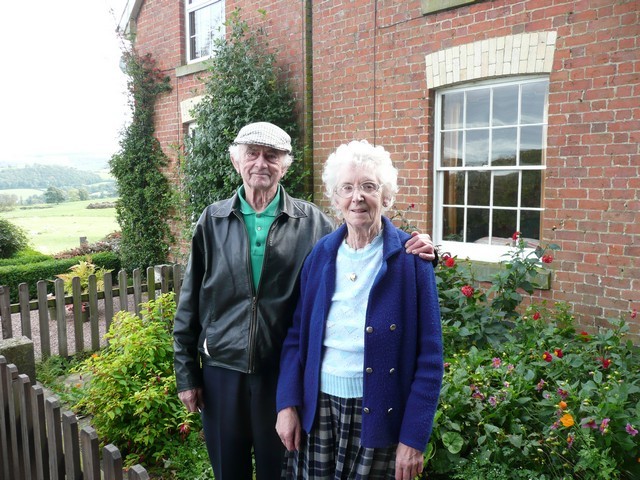
Cousin Harold and his wife Vera, standing outside their cottage in Kerry, near Newtown in Wales, close to the one once inhabited by my great grandfather

The Ancestors and our Spiritual Heritage

We are unusual in the Western world, where the prevailing culture doesn’t generally consider the ancestors to be a direct influence in our lives. Our deceased relatives are remembered fondly (or otherwise!), stories may be told about their lives, and graves tended for a while. But that’s generally as far as it goes. Many if not most other cultures around the world, however, consider the ancestors to be a living presence. Although they may inhabit another dimension, their world and ours can interact. This may at first strike the Western mind as naïve, or reeking of old-school Spiritualism, but if you study these different belief systems, it becomes apparent that they can be subtle and sophisticated in their appreciation of different forms of consciousness.

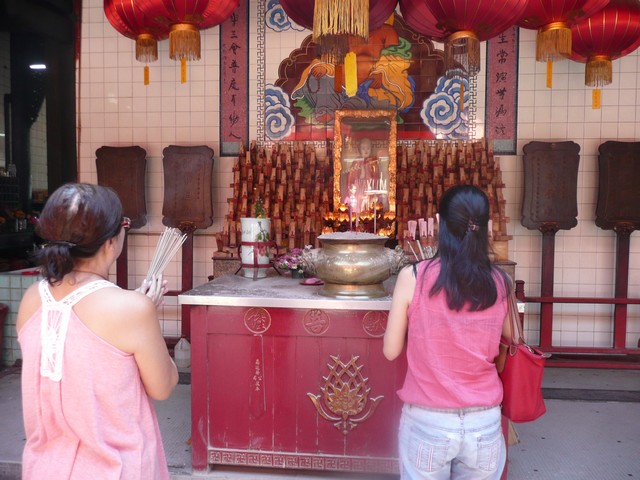
Connecting with the ancestors at a temple in Georgetown, Penang

And a sense of this interdependence can also be used for specific purposes. For instance, in Tuva, Siberia, if a man or woman feels called to become a shaman, they may try to draw on their connection with a particular ancestor who was a shaman, and link in to their power and knowledge as a source for their own initiation. Unlike some New Age perceptions of shamanism, it’s often a calling that a Siberian would rather not experience. The commonest way of realising that they are being compelled to become a shaman is through falling into a period of illness or intense suffering. It’s more a case of giving into the demand, rather than seeking it out. And in which case, a contact with an ancestor who was also a shaman may be the best way to tread the right path and set the seal on it.

In shamanism, drumming and chanting can be a way to communicate with the ancestors. This also means opening up the threefold world, and going beyond our human ‘middle world’. Spirits of the dead usually inhabit the world below, and sky spirits or transcended spirits inhabit the world above, according to this shamanic world view. And once this connection is established in a conscious way, the shaman has a pathway into the world of the spirits. It means that he or she can then regularly practice rituals to awaken the connection, which serves as a channel for wisdom, healing or prophecy, according to whatever is required by those who need their help.

The shamans’ ritual; Herel and his wife conducting a blessing ceremony in Tuva, Siberia

The Way Forward, with a contribution from R. J. Stewart

Shamanism is thought to be the most ancient of religions, and interest in it is growing again  in the modern world. There is an eagerness among many spiritual seekers to work with their own form of shamanism. But how do you go about this, and does it work? Can it be done by blindly copying the practices of existing traditional shamans – in Siberia, South America or Africa, for instance? Perhaps a more authentic way forward is to re-connect with our own ancestors, and learn from them if we can. Author R. J. Stewart, an expert in Celtic mythology and the Western tradition of magic, has kindly contributed this post which sheds light on a controversial question:

R. J. Stewart

Between the late 1980s and the mid 90s I had several meetings with Native American Elders, often to compare what is known as “Celtic” tradition today, with aspects of their multifold traditions. When the first contingent turned up unexpectedly at a talk I was giving in a bookstore in Greenwich, Connecticut, I felt as if I was on trial…as indeed I was. Subsequent private meetings relaxed into a degree of mutual trust, resulting in a potential invitation to join the World Council of Tribal Elders, to represent Celtic tradition, in a forthcoming gathering in Australia. The elders were especially critical of New Age shamanism, which they saw as form of alternative popular psychology, and not truly shamanistic. We agreed on that.

As I was unable (though not unwilling) to attend, the invitation was never formalized. A few memories of our meetings stand out for me, and we seemed to confirm to one another that a proportion of my Scottish ancestral traditions shared certain truths and magical practices with theirs. We talked a lot about revenge and forgiveness, ancestors and spirits. Two examples will have to suffice here:

1 – Spirits through the fire. During a convivial meeting with Grandmother Kitty the log fire exploded  into extra flame very dramatically then died right back only to resurge, three times. As in old Gaelic tradition, such manifestations are not commented upon when they occur, but silently acknowledged, perhaps with a slight nod of the head. The next day her apprentice (a mature woman) said “Grandmother instructed me to ask you how many spirits came through the fire last night ?”. I answered “There were three spirits that came through the fire… I sensed them, but could not tell what they intended”. That seemed to be acceptable. There was no “teaching” no “wisdom transmission” just mutual silent acknowledgement. At one point, though, Grandmother had said something that I could not fail to forget: “We do not want your people adopting our traditions. You have your own traditions to feed and care for. When your people are mature again within their own traditions, we can all come together in peace at last”.

2 – Ancestors: on another occasion, Big Toe Hears Crow looked at me and laughed. He said “We feel sorry for you white folks…you only have your miserable human ancestors. We have birds, animals, forests of trees, and even entire mountains”. He had a habit of humorous provocative utterances. And again: I was talking about the Wheel of the Year (at the bookstore mentioned above) and asked if anyone in the audience had examples in their own understanding or tradition. Big Toe quietly said “ Well, just like you, we have the East and the West, and then..hmm…yes… there is the South and the North. And there is a Buffalo in there somewhere, but the Buffalo moves around a lot”. 

Both of the elders that I mention here have passed on into the spirit worlds in the years between then and now. Not all of my ancestors are miserable, except perhaps some of the Calvinists. One “went native” in South Africa in the late 19th century, where he was renowned at spirit healing. He surely found a wandering Buffalo.

Note: The correct bovid name is “Bison” for North America, and “Buffalo” for Africa. But the ancestors do not seem to care.

R J Stewart 2023

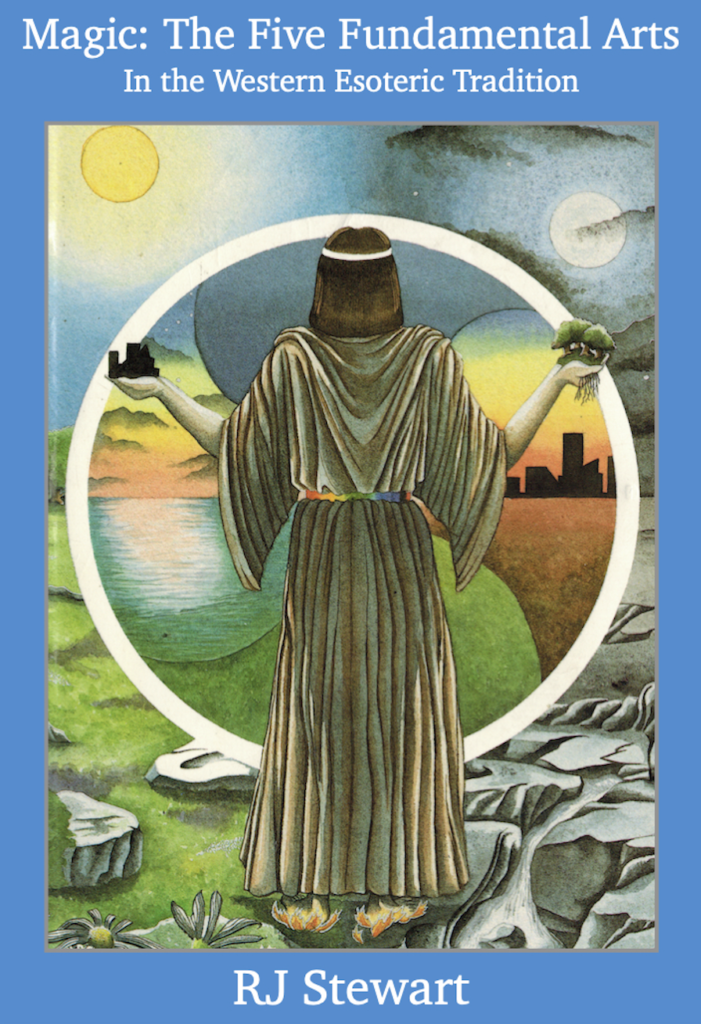
Books by R.J. Stewart include The UnderWorld Initiation, The Well of Light,   and The Spirit Cord

Involving the Ancestors

I have written elsewhere about my own visit to a wise shaman in Kizyl, Siberia, in 2005 – see ‘Meeting the Shaman in Siberia’. 

During this session, with chanting and drumming, he endeavoured to drive out the ‘bad energy’ or misfortune, which he identified as lodging in my shoulder –indeed, I did tend to ‘shoulder’ burdens. I can interpret this in a straightforward way, since I’d had a period of trouble and ill health. However, just as the ritual involved Herel connecting with his own ancestors to help him, so I sense that my own ancestors may have been involved too.  

Shaman Herel in his consulting room at Kizyl, Tuva in Siberia

For several years before this trip, I had been researching my family history, which was mostly a pleasurable experience, with stimulating discoveries. However, quite early on in the process I had a different kind of experience, which I can only describe as a spontaneous vision happening on the borders of sleeping and waking. It seemed that a whole procession of dark, shadowy forms was marching right through me, coming in through my back and emerging from my chest. They seemed oppressive, somewhat sinister, and even threatening. I sensed that they had emerged from my ancestral past, and that something connected with fate was unfolding. It was a time when my own life balance was shifting in a profound way.

However, after the visit to Siberia some seven or eight years later, I returned to the UK via Moscow, and en route recorded in my diary:

Woke up 5am after 7 hours solid sleep – with an impression of my relatives and ancestors at my right shoulder, flowing out of it in a wavy shape like a kind of stream. A warm and light quality to it.

So perhaps the shaman’s ritual had actually relieved that heaviness in me, removing the weight of a negative aspect of my ancestry? At any rate, it certainly seemed that something had now been transformed.

The paths of ancestry may run deeper through our lives than we imagine, and it may be understood better than we might think by the ancient practices of shamanism.  I can only speculate how that works – whether, to put it in a rather crude way, a shamanic ritual can work like unblocking a clogged conduit, so that the water can run free and clear again. Perhaps it helps to balance out energies, as anyone’s ancestry is bound to be a mixture of forces, some outdated and needing to be left behind.

At any rate, the season of Halloween is an appropriate one in which to remember and honour our ancestors. Amidst the jolly, scary ghouls and witches trick-or-treating round the town, perhaps we can take time also to quietly recall those who have come before us on the ancestral path, and to cherish their memory.  They are not lost, for indeed, we all share one ‘common life’.

A modern take on Halloween from Topsham, Devon above, with an older depiction of an ancestor from Easter Island below. Perhaps they are not so different after all.

Acknowledgements:

With thanks to R. J. Stewart for permission to include his account of conversing with the Native American Elders.

And to Herel, the shaman of Kizyl, Tuva, who remains a bright presence in my mind.

Plus the organisation known as Saros, which explored notions of ‘common mind’ with the motto that ‘there is always somewhere further to go’. Its history and purpose can be discovered here. Offshoots of Saros can be found here

The month of the ancestors

For the month of October, I have prepared two posts on the deep past of our inheritance. Autumn here in the Northern Hemisphere now leads us towards the darkest time of year; many cultures celebrate festivals of the dead after harvest time, when darkness begins to prevail. Halloween and the Day of the Dead are probably the best known of these customs.

So in the months of declining light, our thoughts may track back more often to distant memories. And we might find time in those darker evenings to research the deeper areas of life, including our origins in terms of family history.

My own father was dying over Halloween, but he actually made it into the small hours of All Saints’ Day (Nov 1st). I was glad of this, as it is a day of more peace and less turbulence. At about 5am, I got the call to say he had passed away. But when I rushed out of my house in Bristol to drive up to Shropshire (too late to bid him farewell) I couldn’t leave straight away. I discovered that the chaotic energies of Halloween had been at work in the night, and my car windscreen was now smashed. However, perhaps none of us can pass on to peace without a breaking up of the familiar world around us. It seemed symbolic.

Listen to the spine-tingling ‘Soul Cake’ song sung here by the Watersons folk group. People would go door to door around the time of Halloween and All Souls’Day, begging for a soul cake.

The Circle and the Line

I have taken a different approach in each post. My first post here is about the ‘circular’ form of viewing our ancestry, which can open up a new perspective on our direct ancestors, through grandparents, great grandparents and so on.

The second will look at some of the more mysterious and magical aspects of ancestry, and explores the idea that it may still in some sense be present for us today, and that we can have a relationship with this. This is about the resonance of our ancestral line and how it may play a part in our lives.

The Circle of the Ancestors

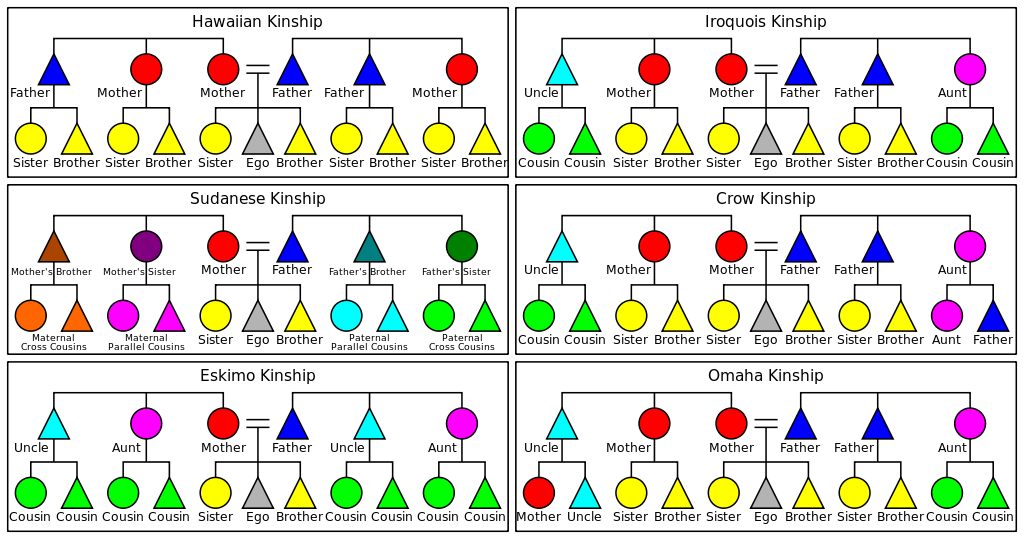
As part of my degree at Cambridge, I studied anthropology. But although I loved the course, I was alarmed to be told that understanding ‘kinship systems’ was one of the most important elements of the syllabus. Really? I had hoped to learn about myths and rituals, songs and customs, maybe even a bit of magic or witchcraft… And it turned out to be rather heavy reading, untangling the complexities of who can be considered a brother, aunt, cousin, or potential marriage partner in each particular tribe. But anthropology certainly did open my eyes to other ways of viewing different systems of human relationships. I learnt that all in all, there is no one fixed pattern of how to define a family or a relative.

Kinship systems can indeed be complex and confusing!

All this can have a bearing on family history. By the time I came to research mine, in the early 2000s, I had forgotten the nuances of Nuer kinship degrees, but I did know for sure that there was more than one way to cut up the ancestral cake. This had largely been ignored by an older generation of genealogists in our Western Societies, who used to focus almost exclusively on the paternal line, which usually carries the family name. The ‘distaff side’, as the mother’s line was disparagingly termed, was often neglected. Why bother with it, was the general genealogical view, when the all-important family name could not be traced up and down the generations? (And heaven help us if there is a hint of illegitimacy! Better cover it up if possible.) However, in a curious way this practice actually benefited me, because my father’s diligent research on  his paternal Irish ‘Phillips’ line – including any distantly-related aristocracy that he could dig up –largely ignored my mother’s family history. It was thus new ground for me to investigate.

Like many other people, I didn’t care much about family history until both my parents had died, and suddenly I was next in the firing line. Perhaps this is commonly a time when we claim our family inheritance, in its intangible sense, along with any material goods left to us. It may turn into a job of stewardship, done according to our own beliefs, as it’s the oldest generation who tend to be the gatekeepers to the family stories, keen to impart the ones they choose, hiding the ones they don’t like.

We can and do change the lens through which we view our ancestors. Knowing this also offers opportunities to ‘choose’ our ancestors, in the sense of selecting that viewpoint. It can be argued that DNA is the sensible way to determine our family connections, but that doesn’t necessarily give us the full picture, since beyond a certain degree of blood kinship, DNA may not share common traits. And for many of us, the ‘story’ of the family is more important anyway, including members who’ve been adopted, born out of wedlock, etc. One branch of my Phillips family is linked to me by the story of two boys, cousins of a sort, who were taken into the main family home at Gaile in Tipperary, while their father purportedly went off to fight for the British in the American War of Independence. And yet, no one can quite be sure whether they were blood relatives – the DNA doesn’t confirm this – or illegitimate and more distant descendants, or even no relation at all, just welcomed into the family and taking its name. In the long run, does it matter? They are firmly embedded in its story now.

So I’m giving over this blog to one particular way of not only seeing, but experiencing the ancestors. It’s ‘the circle’ method, which I’ll now describe here in a slightly adapted compilation from my book ‘Growing your Family Tree: Tracing your Roots and Discovering Who You Are’.

Setting up your Circle of Ancestors

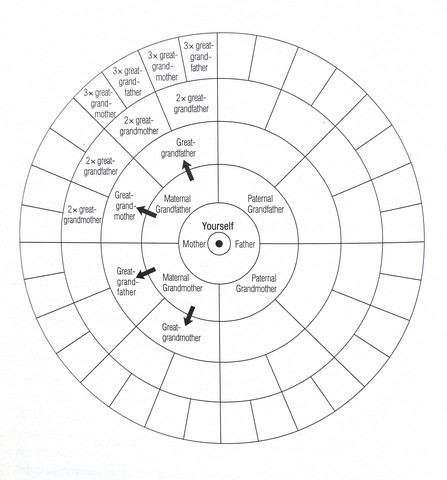
I first heard about this way of invoking your ancestors at a concert celebrating the life of John Clare, a poet who was himself firmly attached to his roots and ancestral landscape. One of the musicians performing there mentioned a family history project which his daughter had brought home from school. She had been asked to enter all her direct-line ancestors into a series of concentric circles, expanding from a central point representing the person in question to include each generation further back. In this case, therefore, the musician’s daughter, would be named at the central point, and her mother and father placed opposite each other on the first circle that surrounded her. The second circle would be marked with the names of her four grandparents, and so on through six circles in total, ending with a final circle containing sixty-four ancestors, all of whom would be her 4x great-grandparents.

It fired my imagination, and back at home, I tried to draw neat circles divided in the correct way, divisions doubling in each circle. It was tricky! Eventually, I achieved a rough template and started to fill it in. This was at a time when I hadn’t got so far with my family history, and inevitably I ground to a halt in different areas of the circle. There weren’t many 3x great-grandparents that I could name at this stage, and very few 4x ones. But the concept, of standing in the centre of circles of ancestors was compelling. I still come back to it frequently, and sometimes check to see if all those sixty-four are now included. (Not quite!)

Making a circle diagram for your ancestors

Creating the Circle: Exercise

See if you can create something similar, but I suggest a reduced version to make it more manageable, which will probably end at the circle of thirty-two. I find that thirty-two direct ancestors are plenty, if I want to know them as individuals, and discover their stories. Thirty-two are as many as I could hold in my mind at once, and as this diagram works as a visual aid and a tool for connecting with your ancestors, I recommend keeping it within practical bounds. Bear in mind that if you were to go some nineteen generations back, you would have over half a million ancestors in your circle!

Yes, we do indeed have thousands of direct-line ancestors!

Contemplating the Circles

Now you can start to make use of your chart. What does it feel like, to be at the centre of your ancestral circles? Try the following:

  1. Look at the finished chart (even if not all the names are complete); gaze at it for a few minutes.
  2. Then close your eyes and try to visualise it. Call up the names of those you know; this is probably easiest in terms of one circle at a time, your grandparents followed by great-grandparents and so on.
  3. Can you see in your mind’s eye a circle of sixteen, then thirty-two grandparent ancestors, even if you cannot differentiate each one of them? Which ones do stand out clearly? Which are shadowy figures? Which faces do you know, from your own life or photos, and which are as yet unknown?
  4. Acknowledge them all with gratitude and respect for the life they have passed on to you.

This is a powerful exercise, which can produce different types of effects. You may experience the ancestors as protecting and caring. But being surrounded by family in this way might also come across as suffocating and restricting. There is no ‘right’ way to experience it, and it may well be that you will find that it varies at different times. After all, this is on a par with family life – sometimes it’s the best support we can have, and sometimes it curbs and frustrates us. But if you keep this as an exercise to return to, you may find that your sense of being connected with your ancestors grows, and that in some sense, they become more ‘alive’ to you. Use the circle as a personal ritual to greet and get to know them.

The remote hills at Bwlch-y-sarnau, Wales, which is the landscape which my Welsh ancestors came from

As Awo Fa’lokun Fatunmbi says, writing in connection with the Yoruba people of Africa:

‘Communication with your own ancestors is a birthright….You cannot know who you are if you cannot call the names of your ancestors going back seven generations. Remembering names is more than reciting a genealogy, it is preserving the history of a family lineage and the memory of those good deeds that allowed to the family to survive.’

The wedding of my Welsh grandfather, Rev. Bernard Owen, to my grandmother Hannah Brown, of Devon and Midlands heritage.

Related blogs:

Seduction, Sin and Sidmouth: An Ancestors’ Scandal

The Ancestors of Easter Island

A Coventry Quest: Finding a Grandfathe

The Abduction of Mary Max

Hope Bourne: A Wild Woman of Exmoor

This is the first blog in which I’ll celebrate ‘Wild Women of Words’ – women who lived unconventionally, close to nature, and wrote about their own special pursuits. Here I’ll introduce you to Hope Bourne, whose writing was primarily about the wild landscape that she lived in.

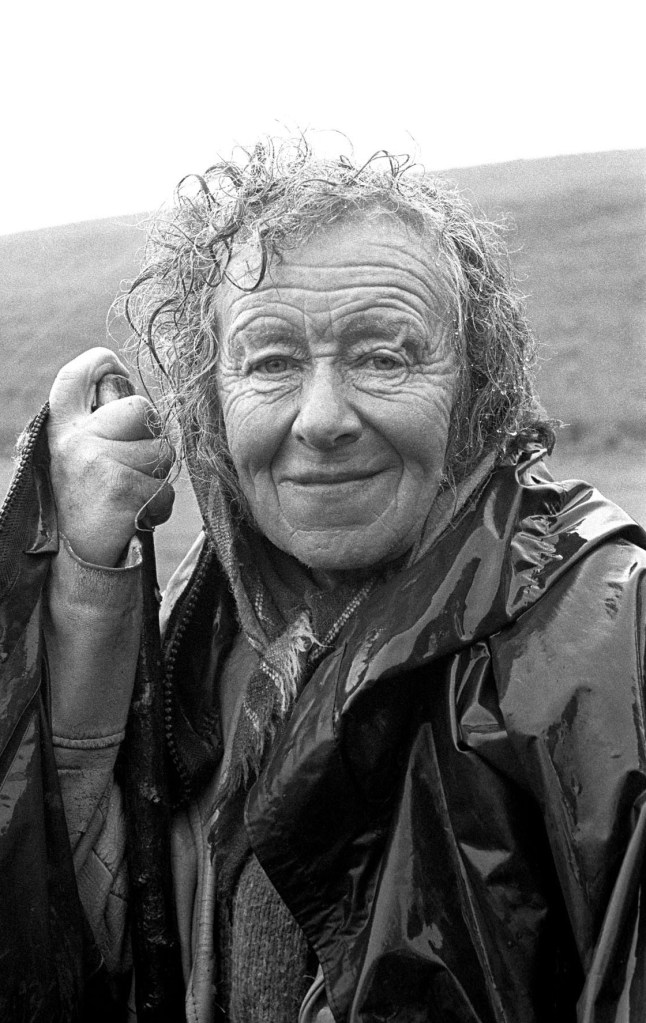
Hope Bourne – reproduced by kind permission of Chris Chapman photography

A Personal Recollection

In the 1980s, when I was living near Dulverton on Exmoor, we used to buy the West Somerset Free Press newspaper. It was an all-purpose local newspaper, with the kind of headlines that didn’t shake the world. (The one which sticks in my mind was: ‘Rainfall breaks all records!’ Amazing, I thought – but reading on, I discovered that for the first time ever, it had been exactly ‘average’ for the last month. And ‘Hit and Run Driver’ was the villain who’d left a slight dent in another car and not left their details. But perhaps we should be thankful for such mild dramas in local life.


However, the newspaper also contained something unique – a column by one ‘Hope Bourne’. Was it a pseudonym, I wondered, as ‘Patience Strong’ had been a generation earlier, a pseudonym for Winifred Emma May who wrote morally uplifting, often cringeworthy poems for magazines. But I soon realised that Hope Bourne was indeed the genuine name of a woman who lived a very unusual life, immersed in the wild nature of Exmoor. At this time, Hope would already have been in her 60s. She lived remotely, more or less what we’d now call ‘off grid’, and walked miles over the wild moorland every day, sometimes shooting and fishing to catch her food. She was very knowledgeable about history and landscape, and not afraid to speak out from her own values, whether they were the popular ones or not.

Withypool, Hope’s nearest village


I learnt more specifically that she lived alone in a caravan on the site of a burnt-out farmhouse at Ferny Ball in the wilds of Exmoor. She had no transport, but would regularly walk the four miles to Withypool and back, to pick up essential shopping. She observed the changing seasons and the life of the moor in detail, writing and ruminating over the changes and sometimes painting or drawing what she saw – she was a skilled artist who had had professional commissions in her time. All this was the basis for her regular newspaper articles. And she shot rabbits for the pot, a firm believer in the old ways of the countryside. In this way, she was somewhat like the poet Ted Hughes, who hunted and fished as part of his immersion in the natural world, not backing away from the realities of where food comes from.

At this time, we lived in an old Devon longhouse, called Hawkwell Farm. It was no longer a complete farm with all its land, but we still had 10 acres – enough for me to fulfil a dream of owning a horse (or two), and keeping chickens, something which I’d loved as a child. Hope kept bantams around her caravan pitch in the abandoned farmyard. And according to her newspaper column, these bred freely and she often had more bantam chicks than she knew what to do with. So I plucked up courage and wrote to her. We could offer a home for one or two, if she liked?

Hawkwell Farm, a more recent photo, looking rather more well-kept than in the days when we had it. Below are a picture map of its old field systems which was painted on our dining room wall at the time, and the nearby Hawkwell Cross.

Hope did indeed like the idea. She had a couple of spare bantams looking for a good home. She invited me over to visit her and I in turn invited her to come back in the Land Rover with me to lunch, and see where the two bantams would be living. She accepted with alacrity – she was keen to see corners of Exmoor that she hadn’t visited before.

All this happened forty years ago, so my memory is a little hazy, but I remember being somewhat shocked when I drove up to Ferny Ball, to see the ruinous state of the farm surrounding her caravan. And we chatted easily – I was left in no doubt that she was a sharp-minded, lively woman with strong views. I do remember in particular her opinion of the stag hunt on Exmoor, already contentious at that time, and later banned. ‘You see,’ she said, ‘I view it as one of the last remnants of medieval pageantry.’  I had never thought of it that way before, but I mused on her perspective. The deer do need culling, as they have no natural predators such as wolves in this man-managed landscape, and the debate is usually over whether it’s better to hunt or shoot them. There are many articles about deer on Exmoor, and their welfare, such as https://wildaboutexmoor.com/exmoor-deer/ and, in my old friend the West Somerset Free Press. But for Hope to see it as part of the old ways of the countryside, and its rich traditions, certainly gave food for thought.

Red deer, as I photographed them on Molland Common, at the full extent of my zoom lens
An Exmoor pony, on Anstey Common

Hope had arrived on Exmoor as a child. She was born in Oxford in 1918, the illegitimate daughter of a school teacher; her father was an Australian soldier, who she never met, but thought that she probably inherited her ‘love of guns and horses’ from him. Hope and her mother moved to Hartland in north Devon in 1927, and eventually in 1951 to a cottage on Exmoor. With just a short absence after her mother died in 1955 (when Hope tried out life in Australia on a sheep farm), Hope then lived on Exmoor for nearly fifty years. It was a singular life, but not a reclusive one. She loved her life alone, but also welcomed company – remembered by others as a kind, helpful woman. She often helped out on the farms where she was skilled with haymaking, harvest, and working with cattle and sheep. Horses were also her love, and she created beautiful paintings of the Exmoor ponies, who roam semi-wild there.


For many of these biographical details, I’m indebted to Chris Chapman for his video ‘How many people see the stars as I do?’ You can watch a trailer for the film (see below) and purchase it from Chris Chapman directly, an account of Hope’s life and his friendship with her. I’m also grateful to Chris for permission to use his stunning portrait of Hope to open this account.

The Bantams Arrive

Hope and the ‘banties’ thus arrived at Hawkwell, and we gave her lunch and chatted – I wish now that I’d recorded or noted down more of our conversation. Sprite, the female bantam, along with ‘Cocky’ (a male surplus to Hope’s own flock) settled down nicely with our assorted flock of free range hens, and a few more bantam companions. Then a little later, I received a further letter from her, offering me another growing bantam.

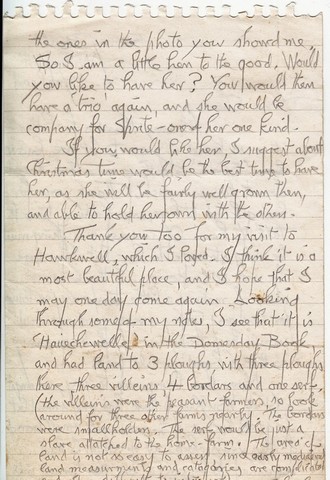
Dear Cherry,

Many thanks for letter – it is so kind of you to let me know how ‘Sprite’ is getting on – I’ve thought about her so much. Thank you for being kind to her, and finding time to talk to her. Of course, everything must be very strange to her, but I’m sure she will settle down. I think your idea of making a little temporary enclosure for her and Cocky a very good one – it would keep them in each other’s company so that a ‘bond’ would form.

Now this brings me to say, amongst a lot of troubles I have had one bit of good luck: of the youngest small brood of this year’s chicks, all of whom I had assumed to be cocks, one has turned into a pretty little lightish-coloured hen, like the ones in the photo you showed me. So I am a little hen to the good. Would you like to have her? You would then have a trio again, and she would be company for Sprite – one of her own kind.

If you would like her, I suggest about Christmas time would be the best time to have her, as she will be fairly well grown then, and able to hold her own with the others.

Thank you too for my visit to Hawkwell, which I loved. I think it is a most beautiful place, and I hope that I may one day come again. Looking through some of my notes, I see that it is ‘Hawechewelle’ (?) in the Domesday Book and had land to 3 ploughs, with three ploughs there, three villeins, 4 bordars [smallholders] and one serf, (the villeins were the peasant farmers, so look around for three other farms nearby. The bordars were smallholders. The serf would be just a slave attached to the home-farm. The area of land is not so easy to assess, since early medieval land measurements and categories are complicated and often difficult to interpret.

Hoping to hear from you again before too long,

Hope L. B.

The early days of our hens at Hawkwell, while still youngsters, before the bantams arrived.

After that, I didn’t meet Hope again, which is much to my regret now. Our own country dream (more romantic and less committed than Hope’s way of life) came to an end when we moved up to Bristol in 1987, and we re-homed our menagerie. Schooling for the children, work in London for my husband, my growing involvement in singing early music– all these prised us out of our Exmoor idyll. Plus it was very hard work. We were not made of the stern stuff that Hope was.

Her letter to me, below:


I kept up with news of Hope through mutual friends from time to time, and eventually heard that she had had to give up her ‘wild’ existence. She was getting older, less healthy, and no richer either – the Poll Tax imposed by Margaret Thatcher, money to pay simply for being alive, was one of the final straws. She had been a fierce resister in refusing all State aid for all those years, and now she was to be penalised for this. As we now know, this hugely unpopular tax was abolished a few short years later – but by then it was too late for Hope. She thus moved into sheltered accommodation with the financial assistance of kind friends.

Hope’s Legacy

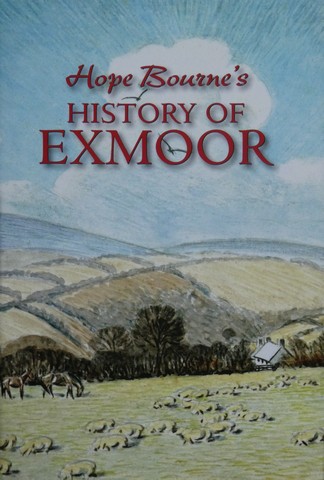
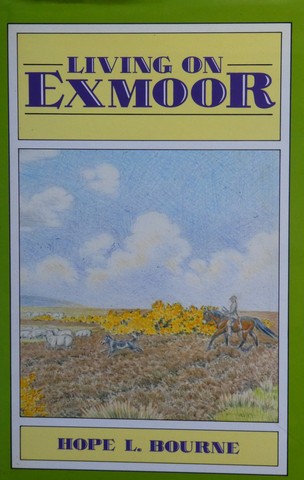
I have three of her books on my shelf: Living on Exmoor, Exmoor Village, and Hope Bourne’s History of Exmoor. Apparently Living on Exmoor was put together out of scraps of paper, packed up in a cow cake bag and sent on spec to the publishers! Luckily, they recognised it as something quite unique, and accepted it. Her writing can be a little on the effusive side, but I’m not surprised that it does sometimes go a little over the top – it is astonishing how she manages to sustain descriptions of nature and the landscape page after page. There are some truly beautiful passages, marked with sharp observations. From the chapter on May, therefore, in Living on Exmoor, which is particularly appropriate to the moment that I’m writing this, with the first of May in a couple of days’ time.

Everywhere the beech has burst into such a glory of living green as bewilders all the senses. Translucent, soft as silk, delicate as fluttering wings, holding the light in showers of pure green-gold – the beech leaves break over the harsh moorland landscape like a benediction, like a voice proclaiming life. Over hill and combe, all round the fields and about the grey-roofed farms the green tide flows and tosses, life from the brown shucked bud, life from the dead wood, life reaching out to the mounting summer sun. How lovely is the beech! No foliage is there more delicate in spring, no leaves so fiery in autumn, nor yet any tree stouter to face the winter gales….Now I walk home in the evening hours, with all the sky an ocean of endless radiant light…and see the hills dissolve in molten space, and all the leaves, each one a green translucent thing, a green light against the light. The sun sinks down and is gone. The horizon grows dark with a line of wind-twisted beech marching along its rim, far off and distant like a drawing. The sense of space and distance is enormous, infinite. It is like looking at a country far off in space and time…The dark sky-line against the light seems to draw one’s soul…Suddenly all things seem possible, for one feels a power that is more than mortal all around. It Is an awareness that is something beyond all human understanding.

The hollow drumming of a snipe comes strange and vibrant in the silence. I turn through the first field gate int the twilight, and the last sound of the night is the croaking of the frogs like inane laughter in the labyrinth of the bog below.

Hope became an esteemed figure in the landscape during her life on Exmoor. In 1978, Daniel Farson made a film about her. She thus became a ‘star of self-sufficiency’ for a while, but didn’t enjoy the attention – she didn’t want to be seen as a ‘back to the land’ hippy, but empasised that lived her way ‘out of necessity’. She never had much money; her grandfather’s will cut off any possible inheritance from her mother.

Since her death, her renown has grown year after year, and she is now a legend. Regular walks for visitors are conducted down the tracks that she walked, she features in Exmoor exhibitions, and has become part of the heritage of Exmoor itself. Our lives only touched each other for a short while, but I’m proud to have known her, and wish it had been for longer. Exmoor itself is imprinted on my soul, and now that we’re back living in Devon, I try to visit it regularly again.

The wild Exmoor uplands of Dunkery Beacon and the beauty of the beech trees in old Exmoor woodland.

For another illustrated article about Hope, with further details of her life, and emphasising her contribution to understanding nature and our place in it, see ‘How Many People see the Stars as I do?’ in The Return of the Native, a blog about Landscapes of Literature, Art and Song.

Cherry’s Cache – At the turn of the year

At the turn of the year – a photo taken at the winter solstice in Bath some years ago

I began this blog nearly three years ago, in April 2020. And before I go any further, I’d like to thank all of you who’ve been reading these blogs, whether regularly or occasionally. It’s a real privilege to know that they’re of interest. Whether Dartmoor or alchemy, Welsh fruit loaf or Huguenot refugees, there is, I hope, something for everyone. When I set up this website with the help of a professional web designer, we talked about drawing in an audience for this. However, when he heard the range of topics I’d be writing about, he was somewhat baffled. ‘If this blog appeals to one kind of reader, then the next might be for a different kind…’ And he didn’t quite know where to go from there. But as it reflects my own genuine range of interests, then we would just have to go with that, we agreed. I could hear the doubt in his voice!

A note about the images: Most of these are from the blog posts mentioned here – and it shouldn’t be too hard to work out which is which, if you’re so inclined!

Thank you, readers! I hope you’ll stay with the blog and I’ll just be running it month to month, seeing what comes up and what I might post. It may not be a ‘forever’ blog, as keeping up the quality is really important to me. But I hope that the posts will still have a presence on the net so that those interested in, say, embroidered samplers or Silk Road travellers or the goddess Kuan Yin or a recipe for a Twelfth Night cake, can still find my posts for these. And by the way, please do make use of the ‘Search Bar’ on the home page. You can enter any relevant keyword for the blog and it should show you the one(s) available.

A little later, I’ll be coming onto What the Stats Reveal – which posts are popular, and where do you all come from. In fact, if you’re going to be bored by the next section about my own writing history, skip on past….

The writing compulsion

I started writing books in my twenties (quite a long time ago!), and in the fifteen years prior to 2020, I was producing a book about every two years. I was caught up in a rhythm, of researching ideas followed by canvassing publishers and then writing the book itself. I was proud to have had a steady sequence of books published, but it was becoming exhausting. Starting Cherry’s Cache was a way of breaking the addiction. Yes, really –a blog, I thought, would be a harmless and rewarding way to channel the urge. No dependency on the whims of editors or the business (mis)fortunes of editors – and a chance to use pictures. Lots of lovely pictures! I’ve always relished matching images to words, which I could do in my talks and lectures, but rarely in books.

You may be sceptical as to a) the demanding nature of writing and b) its addictive qualities, so let me fill in the background.

The cycle of madness

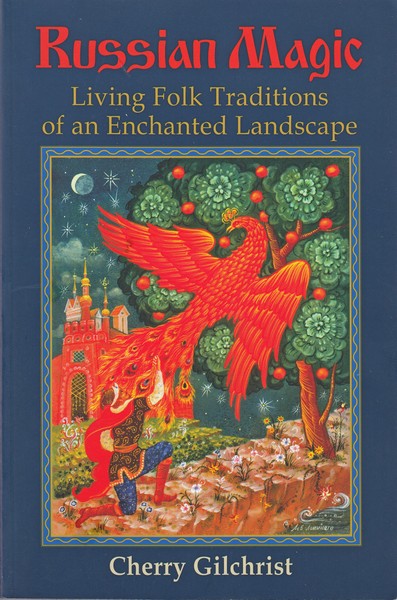
Writing a book involves a cycle of madness. I say this a little tongue in cheek, but it’s not far from the truth. My book ‘Russian Magic’) includes this dedication to Robert:
I would like to thank my partner Robert [now my husband] for putting up with a writer who had her head buried deep in books while researching this project, and who went round muttering about Russian wizards and wolves, and frogs that were really princesses, whenever she came up for air. His loving support and kindness was a life-line to me!

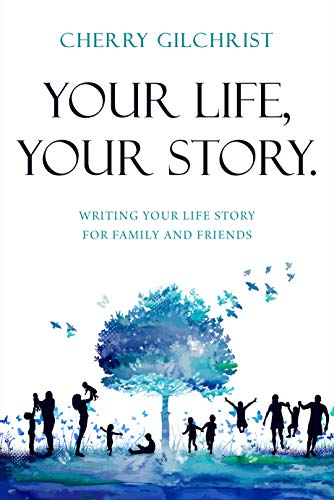
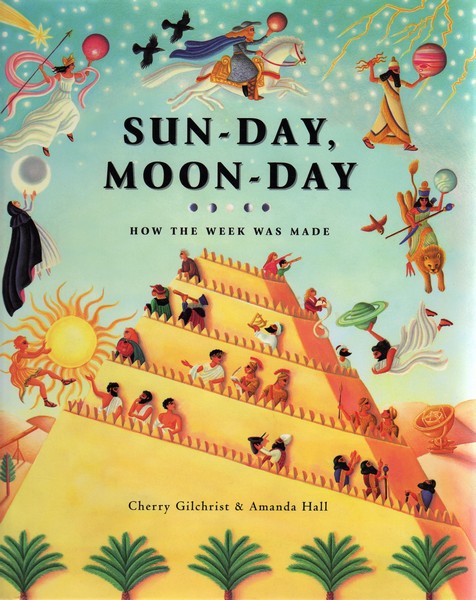
The first phase of writing a book is not quite so extreme, since I relish the quest and seeing the identity of a book emerging from this. The research stage is exciting. Heady, full of promise and possibilities. I have a wide field of interests, and in the 2000s, the books I produced thus included family history, writing life stories, Russian folklore, feminine archetypes and traditional Tarot symbols. I was also tasked with updating my now classic history of alchemy.

But then reality bites, writing up of an outline, often chapter by chapter, and producing all the back up info without which the publisher won’t offer a contract. (Who are the potential readers? What other competing books are out there in the marketplace? Do I know, and do I care?) It can be a grind, but it’s also reassuring afterwards to know that there’s a solid framework for the book.

I usually write to a publisher’s contract. And I don’t mind deadlines – indeed, I love them. In my opinion they are a writer’s best friend, a great incentive to keep going, providing you’ve agreed a realistic delivery date, and you’ve a contracted commitment from a publisher. Nevertheless, the outcome isn’t always rosy. Several times during my career I’ve been badly let down when publishers go bust, leaving work unpaid, and a contract is suddenly no more than a useful fire lighter. Projects can also be cancelled after the months of preparation but before the signed deal. And once I had a script rejected, which is definitely a blow to an author’s pride. (It rankles, even now!) It happens, even with the best agents, which I’ve been fortunate enough to have. ‘You cannot force a publisher to publish,’ is the sum of it. I therefore advise all prospective writers to be philosophical, because there will be stones on your path as well as pretty flowers.

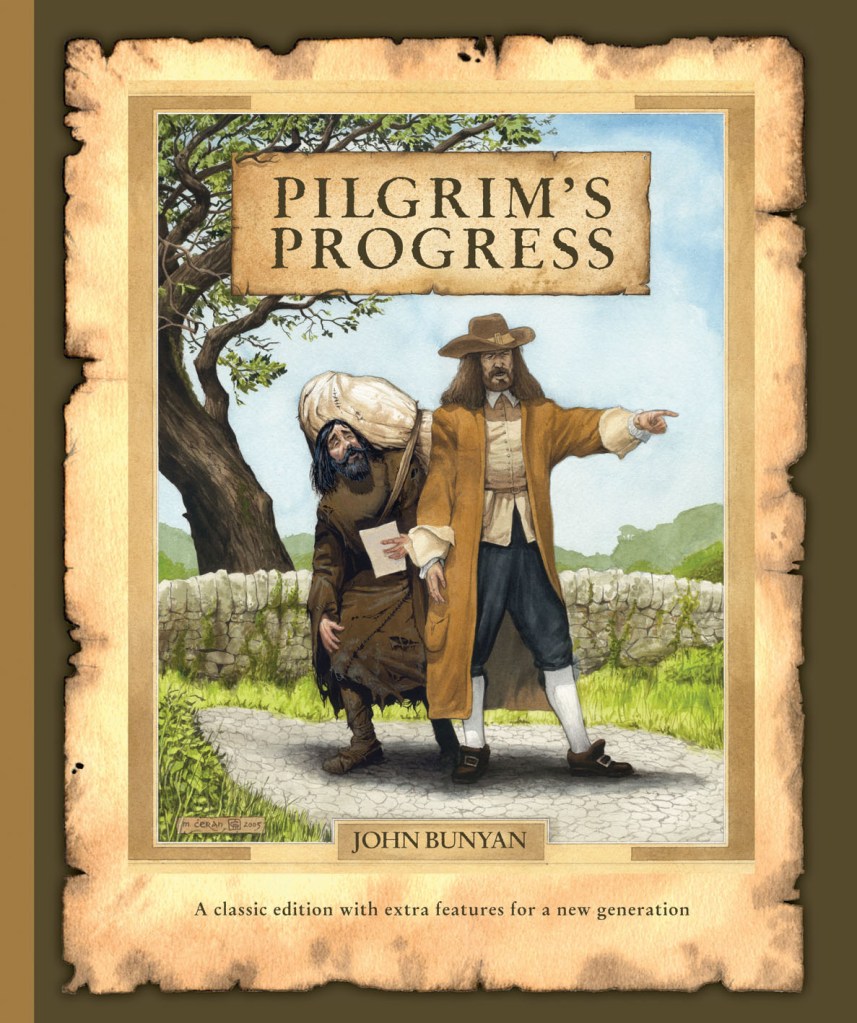
A somewhat relevant image, I think. Be philosophical if you want to be an author! That’s the essence of any advice I’d give an aspiring writer. Pilgrim’s Progress with its Slough of Despond and Doubting Castle is not so far off the mark – but maybe the Celestial City awaits?

The writing phase itself can both inspire and drain you. It’s like a slow wave building up that you must sustain, carrying its momentum forward. The book is always there in your mind, even on days off. And when the text is finally drafted, it’s time to turn to the editing stage. I try to have a short break between the two phases if I can, because it does help, to come back fresh to your deathless prose and see that it’s not quite so perfect as you thought. By the time my final draft has landed in the editor’s in-box (thank goodness for electronic submissions these days!) I often feel exhausted and empty, rather than exultant. It takes time for the well to fill up again, for energy to be restored.

But my final draft isn’t theirs, of course. Then follows what may be a long stage of working with a desk editor (the ‘ideas’ department) and a copy editor (the style and clarity monitor). Finally, with everything ready there’s usually a further waiting stage to get the book printed, unless you’re a celebrity author being fast-tracked for the Christmas list.

And now it’s out! But you’re still on the case, even if you’re longing to start on that next book or (probably better) lie down in a sunny place for several months. There’s promotion, social media posts (groan), and possibly talks and articles and book signings. The author is expected to be very actively involved now in marketing, and often the onus is on us to fix up events and create a social media whirl.

In the good old days of launch parties – though I seem to recall we fixed this up ourselves! R-L: Lyn Webster Wilde, Eve Jackson, myself and Lucy Oliver celebrate the launch of our books at Watkins Bookshop, London. These were for a series called ‘Compass of Mind’, published by Dryad, for which I was commissioning editor.

A new venture

This is not really an author’s moan, as I’ve loved the process overall, and the delivery of my book children into the world. Editors and agents have become close friends, and I’ve also been part of a couple of wonderful writers groups, in Stroud and in Exeter (link). But in the last few years, obviously older than I once was, I feel that I won’t embark lightly on that process again, of conceiving, preparing, writing and promoting a book. (Unless you want to make me a good offer, of course?)

And then the idea was born to start Cherry’s Cache, and fledged through attending a blog-writing course with ‘The Gentle Author’ in Spitalfields, in March 2020, something I’ve written about in an earlier post.

The occasion remains eerily clear in my mind because it was the last weekend we were all allowed out before the lockdown. Our course was a kind of safe space, whereas outside drinkers spilled onto the pavements in unusually warm weather, shoppers crowded the markets, with an eerie semblance of normality. In Cheshire Street market I picked up a Folio Edition of Daniel Defoe’s ‘Journal of the Plague Year’. It seemed fitting.

Back at home, totally at home for the duration, I was able to make contact with the Gentle Author’s recommended web designer. With his expert skills, we played with names and themes, and the blog itself was launched remarkably fast in April 2020. I put up three opening posts, so that readers would have something to delve into. And it became a constant delight for me to work on it during those long months of successive lockdowns, without the pressure of a given brief or the extended effort needed for a whole book.

Cherry’s Cache has thus been my main writing focus for a while, but instead of the once-a-week post of the pandemic, which I maintained for about two years, I’m now posting once every two or three weeks. It melds well with some of my other activities, such as volunteering as an Exeter city guide, working on esoteric subjects (see our Soho Tree blog), and rounding up memoirs and musings. In the last year, I’ve also returned to teaching creative writing online for Oxford University.

Below: so who am I really?

L-R: as painted by Robert Lee-Wade, in a floppy hat reading a book, ‘Grandma’ by Martha, or donning a gown for teaching at Oxford Summer School of Creative Writing?

All and none, perhaps.

Loving the Stats

One of the great things about running a WordPress blog is the ease of checking out your stats. I can prove that as of today, I’ve published 93 blogs – yes, really! I’m surprised too – and this is no. 94. And my word counts show that I’ve just hit the 200,000 word output for all of these. That could have made two whole novels. (But not quite ‘War and Peace’.) It seems that I haven’t switched from books to blogs to reduce my output.

I can also peer behind the scenes and find out who has read what blog and when. Well, not who exactly, but how many readers. And roughly where they came from. On the day my last blog went out (December 18th) I had over 100 from the UK and the USA, but also from Canada, Nicaragua, Ireland, Spain, New Zealand, Hong Kong, Kenya and Australia. Previous visitors were also from Bhutan, Japan, and Finland. Today is still young – but hello there, Sweden and Vietnam! (I hope that most of you do actually look at the blog, rather than harvest my info for future selling or scamming.) In June 2022, there were just under 2,000 visitors from the United States and 75 from Spain.

I can even see some of the search terms used, which luckily are mostly harmless, if often misspelt. One or two are incomprehensible: ‘south african jazz artist wearing zobra colours suit’ for instance. What did they find – and did they enjoy it? I can also work out which the winning themes are. As compiled recently, the all-time favourites have been ‘Pangur Ban and the Old Irish Cats’, (which seems to find favour especially over the Christmas period) followed by Enoch and Eli – Black Country Wit, and Mick Jagger and the Cigarette Butt. Other animals do well, since Dartmoor Ponies is in 8th place out of 90 posts, and I’m happy to see that my various blogs on our home town of Topsham are in the top twelve.

Sometimes, a tidal wave of views sweeps in, perhaps triggered by a referral from elsewhere. My account of the artist Anna Zinkeisen and her connection with the Whitbread Zodiac Calendar, something I researched at length and was proud to present, was little studied until suddenly, between March and May this year, she had nearly 1000 views. I’d love to know why. Perhaps it was a link on a study course? (Below: Anna Zinkeisen’s self-portratit and a page from her Zodiac Calendar)

And some posts – like Enoch and Eli, for instance, take a while to find their audience and then they seem to roll on merrily ever after.

Aynuk and Ayli were fishing in the canal:
‘Me mate’s fell in the canal !’
‘Owd it appen?’
‘I just took a bite ov me sanwich an me mate fell out.’


Gerrit?

However, some of my very early posts, while building a readership at first, have ebbed away out of sight.What indeed is wrong with ‘Seduction, Sin and Sidmouth – an Ancestor’s Scandal’? Nothing, in my view! I may bring wicked Gt Uncle Edwin back to feature again on a future date.

Until then, here’s thanking you all once again, and wishing you a very Happy New Year!

Madness and Marat Sade

Crazy Times in Cambridge – Part Three

I’ve posted two blogs already about ‘Crazy Times in Cambridge’, but this third will deal with some seriously mad enactments, rather than just student exuberance and defiance.

In the early spring of 1969, a bunch of assorted students, friends and townies began to rehearse for a production of Marat Sade in Cambridge . Or, to give it its full title, The Persecution and Assassination of Jean-Paul Marat as Performed by the Inmates of the Asylum of Charenton Under the Direction of the Marquis de Sade, written by Peter Weiss. It’s a play within a play, set in 1808, and featuring the inmates of a French lunatic asylum fifteen years after the French Revolution.

I’m proud to say that I was one of the insane band. We gave our all to the madness and chaos. Bruce Birchall, our alternative-style theatre director extraordinaire, strode around in rehearsals, thwacking his tall boots with a whip, in a suitably de Sade manner.  It was a stirring, primeval experience, which took up a disproportionate amount of both our study and leisure time, but engaged us completely. When we performed at Peterhouse College, one friend in the audience reported, ‘At first I was just looking at students acting as lunatics. But then you really did become lunatics.’ Praise indeed.

The photos below are taken from the sheets of contact photos for the production, which I’ve managed to keep hold of all these years.

Bruce Birchall, director, top left in shirt, the herald John Barker with a feathered cap, Julian Fellowes, in charge of the lunatic asylum, bottom left. And Jo Morgan, as Marat himself, in the bath, bottom row.

One of the poignant aspects of looking at these photos now is to ruminate on what became of those who took part. I have followed some over the years, and caught up with others more recently, thanks to the ease of Internet searching. Here are some of our varied destinies: human rights lawyer, initiated as shaman in Siberia, financial journalist, expelled from Cambridge for drug dealing, local radio commentator, imprisoned as member of the Angry Brigade, advertising executive, writer, died young of natural causes, computer scientist. A mixed bag.

Isabelle Feder, whose recollections are posted below, featured in this photo which was made into a giant-sized poster to advertise the play, and placed prominently in the window of Bowes & Bowes bookshop.

However, while doing the original research for this blog researching for this blog, in 2012, I was sad to discover that Bruce Birchall had died the previous year before in 2011. But a conversation about Bruce’s demise was to be found here.

As David Robertson remarks there (another of our troupe at the time): He was an ‘interesting’ indeed extraordinary character; some would say ‘colourful’; others, ‘impossible to manage’. He was both generous with his time, and relentless with his views. In the time I knew him, he would pick an argument in an empty room. Yet beneath a personal presentation that owed no debts to genteel bourgeois conformity, or even hygiene, lay a sharp mind, albeit one distorted, some would feel, by an intimidating monomania.

I’m afraid the ‘poor personal hygiene’ comment really was true! You didn’t get too close. As Margaret, then the flatmate of Gill, David’s future wife, also confirms: We used to hide the hairbrush when he came round as he had chronic headlice and would pick up the brush, stand in front of the mirror and brush his nitty knotty locks. He would look for it, and we would have to say ‘Oh where can the hairbrush have got to?’  

Gill, whose hairbrush was abused, seen here as an inmate of the asylum playing Charlotte Corday, the peasant girl who (in real life) hd murdered Jean-Paul Marat in his bath. I think the girl top left is probably me.

Others have written up their accounts of Bruce during his post-Cambridge years, when he headed into urban radical theatre, squats, street events and the rest. He was also a grand master at chess, and some have remembered him almost solely for that. A brief resume remains here and another memoir can be explored here.

Spot me looming in the top row, third from the left – lots of long dark hair. The hand on the shoulder in the foreground belongs to Chris, my future husband (bottom right) – notable for the marks on the knuckles, where they had been stamped on by a policeman during the Denis Healey protests! (See Crazy Times in Cambridge Part Two)

Bruce and the Heir Hunters

Bruce Birchall was also the subject of an edition of ‘Heir Hunters’, a popular television programme chasing up inheritors of unclaimed estates. (Series 7, episode 6, aired July 14 2014), announced with the description: ‘The heir on another estate tries to learn more about her deceased cousin, a chess champion and radical playwright.’

From this I learnt that his mother was from an Austrian or German family, with the name of Wasservogel (‘Waterbird’), and his father was Sydney Birchall. Bruce was an only child. The estate he left was £100,000 – no one knows how he amassed this money. He certainly never seemed to have many worldly possessions, and was living in a Housing Association flat in West London when he died.

The heirs traced were his two first cousins on his father’s side, one of whom, Hilary, spoke about her childhood recollections of Bruce on the programme. He later became the ‘black sheep of the family’, chastised for not knuckling down to a proper job. A friend of Bruce’s from boyhood, Bill Hartstone, had come to see Marat Sade and said it seemed to be full of ‘dangerous-looking lunatics’. (Excellent! Just what we intended.) He also reminisced that Bruce had once played in a chess championship wearing a bathing costume – probably for practical reasons of heat in the competition room! Everyone interviewed, including the playwright David Edgar, agreed that Bruce was very clever.

Only two photos of him were shown, from boyhood -and if I try searching on Google images, the only ones which come up are the ones that I’ve already posted from the Marat Sade production.

Bruce watching his actors, while playing the role of Asylum Supervisor

Updating scenes of madness

My first post about Marat Sade appeared in 2012, on my former blog at www.cherrygilchrist.co.uk (my blog has since migrated to here to Cherry’s Cache, in a different and I hope enhanced format). It produced a goodly flow of responses from others who remembered the production as a stand-out event in their student years; it even led to some happy reunions, as well as a lot more reminiscing. I’ll continue here with some of these conversations.

Did I remember, asked Isabel, the beautiful blonde standing above the crowd of lunatics, that we were dressed in real shrouds? No, I did not.

Did I also know that it was Julian Fellowes, of Downton Abbey fame, who played the asylum’s director? Hah! I was vaguely aware that we were at Cambridge at the same time, and hadn’t been able to remember which one he was. Hello Julian – now Baron Fellowes of West Stafford – you were already practising the aristocratic role that would come your way later!

Julian Fellowes as M. Coulmier, with his ‘wife’ and ‘daughter’, watching the performance by the inmates of the asylum

Did I recall, asked Tim, that he had been crucified as Jesus in the production? Ah, yes…he had a splendid dark beard and long hair which made him a natural for the part.

And ‘she died young’, I was told by Margaret, pointing at the photo of the Dutch girl who had once described me as ‘very, very untidy’. As Else was some kind of anarchist, it seemed to me ridiculous then that she should notice or care about such things. Now I feel sad that she left us a long time ago. 

We were all, also according to Margaret: ‘So young! so pretty! so mad!’

In another photo, that features my own non-starring role, I can also see the hand of Chris, my future husband (bottom right), placed on the shoulder of the guy next to him. Note the black marks on its knuckles. This was the result of us joining in the student protest in March 1968, against Denis Healey – you’ll find the account in my earlier blog **** of how a policeman stomped on it

To crown this rather haunting experience of revisiting Marat Sade, I’ll add here some extracts which Isabel sent me from letters written to her mother at the time. (Included here with her kind permission.)

On 9 February 1968, she wrote:

Sunday morning dawned bright and clear and I ventured forth to audition for the part of a mad woman in Marat Sade. I went to a rehearsal on Wednesday and we had to do the most amazing things. Still it was huge fun and like the man said – “What’s the point of a revolution without general copulation?”  

On 14 March her mood was darker, but triumphant:

The production of the Marat Sade has been going like a bomb. However, it’s terribly scaring and I spent the whole of Tuesday night having the most vile nightmares. I’m very proud of the fact that a large blow-up of a mad-me is adorning the window of Bowes & Bowes – FAME at last.”

Crazy times indeed. 

See also:

Crazy Times in Cambridge Part One

Turbulante Times in Cambridge (part two of ‘Crazy Times’)

Turbulent Times in Cambridge

The second instalment of ‘Crazy Times in Cambridge’

At Cambridge, 1968 – Botanical Gardens

There was plenty of opportunity for some fun at Cambridge, for students in the late 1960s. Our hours were little troubled by lectures (unless we were scientists), and provided that we read the set books, produced our essays on time, and turned up for supervisions, we could do more or less as we liked. This was not necessarily a good thing. Even then, despite enjoying the freedom, I felt the lack of interactive sessions such as seminars, which played no part in the rather ‘hands-off’ teaching system. I missed the stimulation of classes and exchanges of views that we’d had, ironically, in the sixth form at school. I only understood the process at Cambridge some years later, when someone said: ‘It’s set up for graduates and their research – undergraduates are largely irrelevant.’ I loved my time at Cambridge for all the opportunities it offered, but these were largely extra-curricular. Ironically, it was only after leaving university, that I taught myself how to research properly, a skill which I’ve relied on ever since. No thanks, really, to the tutors.

So what did we do instead? Well, my previous post on Cherry’s Cache involved a dancing gig, as you may read in Crazy Times in Cambridge. There was also radical theatre, the subject of my next post, clubs of all kinds, parties, long discussions into the night, great acting opportunities and, in the sixties, student protests.

Our brand new college, New Hall, now Murray Edwards College, and then known also as the Great White Breast. The clue to the name is in the dome, which you can just catch a glimpse of here.

I was never a keen protester. However, our visit to the USA in the summer of 1968 had sharpened up my awareness of world affairs, and first-hand experience there had led me to be wary of police who attacked and arrested people for no good reason. And I knew we should take a stand against apartheid and war; it would be shameful not to. The chief focus of the day was the Vietnam War. In Cambridge we students also protested against the Greek Colonels, against Barclay’s Bank investment policy, against Government minister Denis Healey, and closer to home, against the University itself. This was largely due to its antiquated restrictions. Unbelievably, we undergraduates could be sent down for having a member of the opposite sex in our rooms overnight, for instance, and certainly for anything involving drugs. To be fair, it has to be remembered that the universities were in ‘loco parentis’ at this time. The age of majority was still 21, rather than 18, until 1970; most students therefore were technically ‘children’. Even though some rules were very outdated, the university was obliged to act ‘in the place of parents’. College ‘proctors’ patrolled the streets, especially at night, looking out for miscreants and misdemeanours. More of that later.

The Cambridge Senate House, occupied briefly by protesting students, who set up camp there for a few days. Nothing much else happened, as I recall.

In protest against the university – just what aspect, I can’t remember – there was a student Sit-In at the Senate House, normally closed to all but those with official business. I wandered in to take a look, just to check on who was there. I stayed all of 20 minutes, then strolled out again. Next day, I was summoned to meet the authorities, who asked what my part in the protest was. Fair enough – the tone was friendly, and willing to listen, but it meant that there had been some element of spying and identifying those present. I explained that I was merely ‘visiting’, and hadn’t been a protestor as such, and the matter was dropped.

The most dramatic protest staged by a single student, a college friend of mine, was to stand up at the start of her finals in English Literature, and declare: ‘Fuck exams!’. She then tore up her exam papers and strode from the room. I still feel rather sorry that she chose that path, after all that time studying. Was it worth it? And after all, our own college, New Hall, was liberal in its views, as a pioneering post-war college for women. It is still exclusively for women today, known now as Murray Edwards College, and has a very fine collection of women’s art

Inside the Dome, or Great White Breast, with some of the art collection on display.

So did I play any part in these protests? Yes – my boyfriend Chris and I joined in with the protest against Denis Healey in March 1968, who was visiting Cambridge at the time, and whose foreign policy displeased us. (I’m afraid I can’t remember how!) According to reports, nearly 1000 students turned out. We charged up Trumpington Street with the mob. ‘As he attempted to leave, they surrounded his car and lay down in front of it. As students threw themselves in front of Healey’s car, the police tossed them into the gutter, injuring many.’ (British Student Activism in the Long Sixties – Caroline Hoefferle) Chris didn’t get as far as any car surrounding posse, as he tripped up while running towards it, and had his hand stamped on by a passing policeman. (Accidentally, to be fair.) The marks on his knuckles didn’t go for years. I stuck to the margins, somewhat lukewarm in my efforts, and not entirely sure what Healey had done.

Denis Healey, Defence Minister in Harold Wilson’s government, whose policy displeased us

Then there was the major Vietnam rally in London, the now famous Grosvenor Square Protest in Oct 1968. This was where American Embassy was situated at the time, and the general intention was for a peaceful mass protest against the war in Vietnam. A call went out to all students in the UK, to join in. We climbed on a hired coach leaving from Cambridge early on the Sunday morning, sleepy-headed after a late night (of course), and took our seats yawning to be bussed to the capital. On the way down, somewhere near Cheshunt (no M11 then) a squad of uniformed police pulled the coach over into a car park, where a astonishing array of some further 40 police officers stood waiting for us. We were ordered to disembark, our bags were searched, and little polythene bags full of liquid red paint (which had been handed out on the coach) were confiscated. One girl had a knife with her, which they tried to confiscate too: ‘It’s for my breakfast!’ she said indignantly, producing her sliced bread, butter and marmalade as evidence. She was allowed to keep her harmless piece of cutlery. I don’t think they found anything else, and we were sent on our way again.

Thousands of students arrived in groups from all over the country. My rather blurry memories of the protest include my sense of anxiety when we marched down Oxford Street,and some of the hardliners (not in our own group) began to smash shop windows. And I felt downright fear when mounted police charged the protestors, in Red Lion Square as I recall. Another friend was in tears as she witnessed it, and I backed off as far as I could. This wasn’t what we’d expected. Surprisingly, looking at posts from the news coverage now, the reports are remarkably fair in distinguishing the thousands of peaceful protestors (the intention of the march) from those who turned violent.

My own engagement with protesting ended – it was not for me – but in my final year of university, the infamous Cambridge Garden House Hotel ‘riots’ occurred in Feb 1970. Although I wasn’t there, the severity of the official response shocked me with a profound and lasting effect . The days of more innocent protests, when students were largely indulged, were surely over.

According to the records, The Garden House riot was a civil disturbance at the Garden House Hotel in Cambridge on Friday 13 February 1970….The Greek Tourist Board had organised a “Greek Week” in Cambridge in 1970, with support from the Greek government, which was at that time a highly oppressive regime, a type of junta. Protesters against these Greek ‘Colonels’ over several days culminated with a crowd of several hundred demonstrators picketing a dinner for 120 invited guests at the Garden House Hotel. ‘The protesters picketed the venue – in a narrow cul-de-sac off Mill Lane, beside the River Cam – to discourage diners from entering. The noisy crowd attempted to disrupt speeches inside, with a loudspeaker…playing music by dissident Greek composer Mikis Theodorakis. Protesters invaded the hotel’s garden…banging on the windows of the venue and climbing onto the hotel roof. An attempt to break up the crowd using a fire hose…failed, and violence broke out: the hotel was invaded and damaged…one policeman was seriously injured, others received minor injuries…Around 80 policemen accompanied by police dogs restored order by about 11 pm.’


Six students were arrested on 13 February, and the University proctors provided the police with the names of approximately 60 further students who they had spotted in the crowd. Fifteen students were finally tried at the Hertford Assizes in June and July 1970, on a variety of charges which included ‘riotous assembly, unlawful assembly, assaulting a police constable, and possessing offensive weapons….After a trial of seven days, the jury took nearly four hours to reach its decision. Seven of the defendants were acquitted, but eight students were convicted, including the six arrested in February and two others seen pushing in the crowd. All were aged between 19 and 25. Judge Melford Stevenson controversially gave harsh sentences to those involved…The sentences were criticised as heavy-handed….The incident led to a reform of the powers of the Cambridge University proctors.

The Garden House Riot, Cambridge 1970 – a protest against the oppressive Greek regime

One of those arrested was Peter Household, an old friend of mine; we had been at kindergarten together, where our mothers were both teachers. He was actually sent to prison for his part in the the protests. He was never, as far as I know, a violent person; our families had stayed in touch over the years, and the word back from his parents was that Peter had been pushed forward, colliding with a policeman. Even if he did deliberately push, it was hardly a violent attack. In hindsight, these sentences are considered to have been incredibly harsh and unwarranted.

Peter Household ‘playing with a tie’ as he put it, on his way to trial for his alleged part in The Garden House Riot

At Cambridge, we did indeed get an education, in more ways than one. The usual way of considering an Oxbridge education is that it may set one up for a good job (academic, Civil Service, scientific, what have you) and that it may also create a circle of contacts which will last a lifetime. It was also a place to launch a successful acting or directing career in theatre and television. But for some of us, it was the start of something different:

In his blog, Peter Household comments: My role in the protest was extremely minor, and my presence there almost accidental; but its effect on the rest of my life was total. Everything that happened from then on stems from the night of Friday 13th February 1970. And indeed, he recalls that being imprisoned with two other committed left-wing protestors began his real political education, an ironic consequence of the prison sentence, and something that has shaped his life path since.

My own path was shaped by something rather different at Cambridge– my contact with Buddhist meditation and with groups studying more esoteric traditions. But I was nevertheless a witness to some of the more radical and political initiatives, such as the protests described here.

Hilary Mantel – Words of Wisdom

‘Ideas enter your life as strangers. They might look shabby at first, but they may be angels in disguise.’

Around forty of us sat poised, pens and notepads at the ready. We were all eager to catch the drops of wisdom which were about to fall from the lips of one of the most accomplished writers of our time. Hilary Mantel’s masterclass was a one-off, sold-out experience at the Budleigh Literature Festival in September 2018; I was one of those lucky enough to acquire a ticket.

Now, with the sad and sudden news of her death, I would like to share some of the notes that I made from her class. Hilary lived in Budleigh with her husband, in a penthouse flat with a glorious sea view that she said helped her to write. She was President of the Literary Festival, and usually gave a talk there each year. Once, Robert and I sat next to her at another talk and exchanged a few words, but I felt too shy to get to know her further – something I regret now. The last time I set eyes on her was during our week of renting a beach hut in Budleigh in July this summer, which was more or less in front of her flat – she swept out onto the balcony in her floating garments for a quick breath of fresh air – almost a dramatic appearance in itself!

Hilary leading our masterclass in 2018

She came from very humble origins, and suffered a great deal with ongoing medical problems, largely caused by poor care and endometriosis. To those who found her appearance or indeed her voice strange, her physical condition and medication were the main cause of this. It took a long time for her talent – genius – to be recognised, through her now famous ‘Wolf Hall’ trilogy, and the winning of the Booker Prize twice over. If you’re interested in reading more about her life story, ‘Giving up the Ghost’ is a powerful memoir – one which I’ve often recommended in my Life Story writing classes.

The Masterclass
Hilary gave out to us generously throughout the day of the masterclass, starting with a look at the basic process of writing. Whatever our level of experience, she told us, it’s something that we never finish learning. ‘We’re all beginners. Every day when I sit down to work, I’m a beginner too,’ she told us. And the process is always unpredictable. ‘Sometimes words come out in an undisciplined torrent, sometimes it’s like pouring treacle’.

I took copious notes that day, and this is a selective version, organised into a short form for general interest. It’s aimed at being a faithful view of how she talked, and what she said, while drawing from her experience, and responding to our eager questions. Everything quoted in direct speech accords as exactly with her own words as possible. I write this as if she was still living – I don’t feel ready to relegate it to the past yet.

Hilary’s Wisdom – the process of writing
It takes a lifetime to write each book. ‘Everything you know and what you are is in that book, either on the lines or between them.’ And it won’t always work: ‘Experience does teach you to fail – and fail again – and to fail better. Nothing is wasted – not time, not paper, nor the stories that seem to go nowhere – everything remains in potential.’ It may be frustrating to fail, but ‘this frustration makes writing a fascinating trade.’ Accepting that has been part of her own journey: ‘I wish I’d stopped assuming that every good idea I had must turn into a novel.’

One tip, if you have a project not working, is to ask yourself if you’re working in the right medium. If in prose, try to think instead of how it might work visually, or as dialogue. ‘Sneak up on it with a camera.’ And there could be a staged option too; when she works with complex factual material, she often asks herself how it might be presented as a theatre or radio play. ‘This usually helps you to crunch down on what’s needed. Whatever medium you’re working in, make use of other ones to help you. Ask yourself, “Am I working in the right form?”’

The sweep of Budleigh beach – Hilary Mantel and her husband lived in a top-floor flat in one of the white houses on the left

Drawing from memory
And sometimes even the wayward stories will come good. One that she couldn’t finish for years was finally solved when she had to wait on a platform for a train for a very long time. ‘Such periods of time are frustrating to civilians, but to writers a gift.’ As she allowed her mind to go into idling mode, and to play with memory, she recalled a girl from her childhood who gave her just the right idea for her character.

She often asks herself about puzzles from the past – ‘Why was this person like that?’ Or why did she herself respond in a certain way to a person or situation? ‘When you look back you can see yourself as a character in a story. If you exercise your memory you will never, ever be short of material.’ ‘Strive to think well of yourself and your experience because everyone has a pot of gold in their memories.’

Memories don’t always make sense – you may ask yourself what was that about? But, she affirmed, the sense is extracted as you write. ‘Be willing to leave things in suspension as you write; learn to live with them incomplete. You don’t have to resolve everything for the reader either. Your task is to arouse the reader’s need to know, not to satisfy it. If your story works, it will open up in the reader’s mind a great many questions – in fact that’s a huge favour you’re doing for someone.’ In other words, questions are just as important as answers.

The Festival Programme one year after the Masterclass, with Hilary as top billing; she was also the President of the festival

A collage of ideas
Hilary told us how she tends to put her books together like a collage, with snatches of conversation, and images for instance. She has a display board, which used to be a giant pinboard, studded with index cards. But now it’s a whiteboard, where she plays unashamedly with ‘nursery school’ materials such as coloured pens. She uses pictures, writes salient points, and draws characters as if they were on stage. ‘Feel free to enjoy yourself!’ she told us.

‘Ideas come from the paths you didn’t take – the unused parts of yourself. If you are a woman, inside you is the man you could have been and vice versa.’ Other roles may also be within you, so ‘let those people out for exercise!’

Don’t judge ideas too quickly. ‘Ideas enter your life as strangers. They might look shabby at first, but they might be angels in disguise.’

Writing freely and dreaming, is always worthwhile. And reading is never a waste of time. To be a good writer, you need to be a good reader.

The book tent at the Budleigh Literature Festival

The story at work
As a basic premise:
Plot – is ‘what happens’
Characters – are actors, and must be interesting
Structure – is how to unfold the story, deciding what goes where

Characters
Your characters need the capacity to act, grow and change – and that ‘change’ is ‘the plot in action’. You need their desire to make the story go forward; your characters must want something that they struggle towards, and then the change occurs as they struggle. ‘Characters come to life through showing them in action.’

‘Also ask of your character: “How do their mind and emotions work? What filters do they protect themselves with?” And you must write a book from your whole body, not from your head.’ She found it difficult, she admitted, to get out of her head and into the body: ‘Try to look through people’s eyes, listen with their ears, feel their sense of touch. Get an all-round sensory experience.’ This way, your character will really ‘be there’ in every paragraph.

We all have an instinctive appreciation of a good story, and it’s essential to have that ‘good story’ in our writing. ‘Without that – nothing!’ Screen writers are adept at this – so if you’re stuck, use a screen-writing book to teach you how to put in hooks, mark turning points, and time the different stages of a story. Though, in her experience, you don’t have to follow this rigidly. It doesn’t all have to be laid out beforehand: ‘The best ideas come when you’re actually writing’. Even the ending of your story will often emerge while you’re writing it.

Budleigh Beach – the waves and countless pebbles an inspiration for writing. The pebbles are actually famous, being around 250 million years old, washed across from a river in what is now France. Each one is markedly individual in colour and size, yet all are washed to a smooth finish. Each one has a story to tell…

Editing…
The motivation is ‘to make the best book I can’. You learn to take pleasure in shortening your writing. Cutting leaves you feeling better. And over the years, with the changes from typewriters to word-processing, editing is not so laborious as it was. But simple cutting and moving text is not editing. To edit – step back, ‘interrogate every element’. It might turn into a crisis, if you realise that you need to do a big re-write. But it creates a more powerful book.

Focus closely on dialogue; every unit (the paragraph, in her case) should bring about change in the story. Tighten it up after first draft. She herself aims to reduce dialogue by about a third, and finds this very effective.

As for structure, you’ll know if it isn’t working because you start to bore yourself! Improvements are often to do with shifting the order of events or making changes of pace. Again, if you really need nuts and bolts advice, the screen-writing books are helpful. With your reader, act like a shepherd gently herding your sheep – they don’t know which way you’re sending them, but you can get them to move along in that way.

Read your work aloud – not just dialogue, but everything. Rhythm really matters, and should flow. Reading aloud will detect ‘false notes, weaknesses, redundancies’.

First chapters often get changed later on: ‘You can be proud of it! No one is looking over your shoulder. You have freedom. Write the book you would like to read.’

As for getting advice from others: ‘A book is not a democracy.’ You do not have to account to the world for what you’re doing. If you’re going to take advice though, take it from the best.’

If you have the option, set your work aside for a while – put it in the drawer: ‘The secret is, in the dark it changes!’

Hilary’s own ‘go-to’ book for editing is The Artful Edit by Susan Bell.

Once you have an editor, with a publisher, the situation changes. Editors are good at finding the problems in your work but not usually so good at providing the right solutions. So if they point out the problems, provide your own solutions. Remember that the editor is trying to ease the path to the reader, so don’t be too defensive in response to their comments. And later, at copy-editing,, line-editing stage, the editor is your best friend, helping to bring consistency to the book.

In general, though, be protective of your work. You need to intuit who it might be worth showng it to. Ask yourself what it is that you want to get back from them. Encouragement, yes – we all need it. But asking for technical advice is different.

And finally
‘The time to write is now. Write it the best you can. Don’t worry about the market – write what you want to write. In time, if you keep faith, you’ll create the market for your product. Identify the story, get it on the page. That’s it.’

Tweet from Lucy Worsley: ‘In 2009, a lady came to a conference we had at Hampton Court, about the life of Henry VIII. She sat quietly at the back making notes. She was reputed to be a novelist. I did not know then that a goddess was walking among us.’

Please note: Although I have no copyright over Hilary Mantel’s words as such, this post as an edited version of her class is copyright to Cherry’s Cache website. If you wish to share it, quote it, or use it in any way, please get in touch via the contact form or via my author’s website at http://www.cherrygilchrist.co.uk. I will most likely be happy to assist!

On the occasion of the masterclass, I presented Hilary with a copy of my book ‘The Circle of Nine‘, which she appeared pleased to receive!

Crazy Times in Cambridge

Part One: The Animation Festival

This is the first of three blogs, looking back at the time I spent as a student in Cambridge from 1967-70. Yes, I know, it’s a long time ago, and perhaps I wouldn’t admit to it were it not for the fact that it was a fascinating period, as we entered the era of street theatre, protests, hippie gear, and other stuff (I shan’t talk about the illegal bits!) And also, having fun, sometimes in very peculiar ways. This story is about a stage appearance of an unusual kind.

In 1968, I received an unexpected request. Could I take part – at short notice – in the Animation Film Festival? It was apparently a festival in its second year, as a film article tells us: – ‘It was non-competitive, and the current Cardiff Festival is its descendent.’

The same year in Cambridge, 1968, in the Botanical Gardens. I was proud of my white fur muff, which was rather surprisingly in fashion, along with the compulsory maxi-coat. Mine was purple corduroy.

But I was a person, not a cartoon… surely the point of animation films is that they’re already on screen, good to go? This one, however, apparently required a live body, specifically a girl with long dark hair who could do a bit of dancing on stage. Just gyrating and waving arms…like on a tropical island…nothing too choreographic. I was doubtful. But, I was told firmly, the Dutch director (of international repute, name lost in the mists of time) needed one! It was urgent – the event was already publicised. Surely I could give it a go? Perhaps I could…. after all, how hard could it be? Although I was somewhat lacking in precision and delicacy, as a dancer. I did not get beyond the first year ballet class as a child. And what if it was something sleazy? But, I was reassured, it was all above board.

It was too late now to back out- I could but try.

I felt pretty daft in the grass skirt, and as for bare midriffs, I’ve never gone in for them, having a scar on my stomach following an emergency operation as a new-born baby. No time to worry about that though, as on cue, I wiggled my way sideways onto the stage, while suitable Hawaiian music played. Not that there was much stage to wiggle on, with the cinema screen just behind me. It was both simultaneously terrifying, and hysterically funny.

A lasting memento…here I am, dressed for the first and last time in a grass skirt, in front of a few hundred people

And then what? This was, after all, a festival of animated films. There was nothing on the screen itself except – as you can see – a palm tree and a simple tropical backdrop. This was apparently some kind of clever cinematic joke. ‘Oh God, I get it now – it’s me who is the ‘animation’!’ The penny dropped for the audience too, who roared with laughter; I simpered and continued my waving and teetering until signalled at last to stop.

The director seemed very grateful – maybe too grateful, when he then invited me out to supper? I declined and resolved never to dance in public again.

Perhaps some day, someone will discover this photo and claim it as an important milestone in animation history. Perhaps they will track me down and explain my significance in cinematic development? Perhaps…but no, better let sleeping grass skirts lie…

I’ve not found trace now of this actual film, but a little more about the festival has come to light.
In this analysis of the 1968 festival, we get a description of the festival theme film: ‘All the programmes were given a lively send-off by the festival film, Cambridge Steam Engine, made by Charlie Jenkins and Heinz Edelmann of Yellow Submarine fame. Queen Victoria sits unamused, screwed firmly to the screen, while coloured railway-engines cavort behind her, growing stranger and more tube-like until the last one, an op-art octopus, sinks slowly beneath the surface, the captain at the salute on the bridge.’

The lead-in film to every screening at the Cambridge Animation Festival

And joy of joys, we can see it for ourselves! Here’s the film, titled ‘The Transformer’, on the BFI site.
It’s delightful, and I have vague memories of it, watching it now. But I’m struck by the fact that my film was the opposite – in Cambridge Steam Train, Queen Victoria stays regally still and fixed on screen, while the train chuffs back and forth behind her – in my appearance, the palm tree stayed rock steady while I dance languorously in front.

The article’s author describes the set-up, and then singles out a raft of short animations for praise. Mine was not among them. Is this good or bad? Well, there’s still time to be ‘re-discovered’ – perhaps!

Two ‘forgotten books’ – written with enthusiasm, now rarely making an appearance. Curiously enough, the short story on the left, written for students of English, looks rather like me in my late teens – even though I never met the illustrator!